

LED Shelf Lighting for Small Business: How to Choose, Install, and Boost Sales
LED shelf lighting for small business is one of the highest-return upgrades a retail store owner can make — yet most small shops still rely on overhead fluorescents that wash out product colors and drive up electricity bills. If you run a convenience store, bo
On this page
LED shelf lighting for small business is one of the highest-return upgrades a retail store owner can make — yet most small shops still rely on overhead fluorescents that wash out product colors and drive up electricity bills. If you run a convenience store, boutique, bakery, or specialty shop, the right under-shelf LED lighting can transform how customers see your products and how much they spend.
This guide walks you through the full process: what types of shelf lights exist, how to pick the right specs for your store, how to install them yourself in an afternoon, and what the real numbers look like on cost and payback. No jargon, no upsell — just what works for small retail.
Table of contents
- Why LED shelf lighting matters for small business retail
- Types of LED shelf lights: strips, rigid bars, and magnetic systems
- How to choose LED shelf lights for your small store
- Step-by-step LED shelf lighting installation (no electrician needed)
- LED shelf lighting cost and ROI for small business
- Why magnetic LED rigid bars are the best choice for small retail
- FAQ: LED shelf lighting for small business
Why LED shelf lighting matters for small business retail
Research published in the Journal of Retailing and Consumer Services found that proper retail lighting can increase sales by up to 30%. That figure comes from controlled studies across multiple retail categories — grocery, apparel, electronics, and specialty goods. The effect is strongest on products that benefit from visual appeal: cosmetics, packaged foods, jewelry, and anything where color accuracy drives the purchase decision.
For a small business, that 30% is not abstract. If your store does $15,000 per month in revenue, a lighting upgrade that costs $500–$1,500 could add $4,500 in annual sales. The math gets better when you factor in energy savings — LED shelf lighting uses 75–80% less power than fluorescent alternatives, which means your operating costs drop at the same time.
Small business owners face specific constraints that big-box retailers don’t. You probably don’t have a facilities team or an electrician on call. Your shelf space is limited, and you can’t afford to shut down for a multi-day installation. Budget matters more per dollar spent. These constraints are exactly why magnetic LED shelf lighting has become the standard recommendation for independent retail stores — it solves the installation and budget problems without sacrificing lighting quality.
The role of visual merchandising — the practice of arranging and lighting products to maximize customer engagement — is no longer optional for competitive retail. Even a 500 sq ft convenience store sees measurable results when shelf-level lighting replaces or supplements overhead fixtures. The key is under-shelf illumination: placing light sources below each shelf surface so products are lit from the angle customers actually view them.
Types of LED shelf lights: strips, rigid bars, and magnetic systems
Before you buy anything, understand the three main categories of retail shelf lights. Each has strengths, but the differences matter a lot for small business use.
LED strip lights
Flexible LED strip lights are the most common and cheapest option. They come on a roll, peel-and-stick adhesive backing included, and you cut them to length. A 5-meter roll costs $8–$15 at retail pricing.
The problem: adhesive strips fail in retail environments. Store temperatures fluctuate. Shelves get bumped. Within 3–6 months, strips start peeling, sagging, or falling off. The light output also tends to be uneven — bright at the LED diodes, dim between them — which creates a spotted appearance on products.
Strip lights work for very short-term displays (trade shows, pop-up events) or permanent installations where you can screw an aluminum channel into the shelf and mount the strip inside it. For day-to-day small business use, they’re a false economy.
Clip-on LED bars
Clip-on LED bars grip the shelf edge with a spring or plastic clip. They’re a step up from adhesive strips — more durable, more uniform light output, and easier to replace individually.
The limitation: clip-on bars are profile-dependent. They only fit specific shelf thicknesses, typically 4–6mm glass or 8–12mm particleboard. If you have mixed shelving (some glass, some wood, some metal), you may need different clip sizes for each shelf. The clip mechanism also adds bulk — these bars usually sit 15–20mm below the shelf edge, which can be visible from certain angles.
Magnetic LED rigid bars
A magnetic LED rigid bar is a solid aluminum housing containing LED chips, with embedded magnets that snap directly onto steel shelf rails — no drilling, adhesives, or tools required. The ARMOR wireless power track shelf system takes this further by eliminating cables entirely, though the standard magnetic rigid bar remains the most popular option for small stores.
Magnetic rigid bars are the recommended choice for small business owners because they solve every common complaint: they don’t fall off, they don’t need tools to install, and they fit any steel-shelf system (which covers most standard gondola shelving used in convenience stores, pharmacies, and grocery shops).
For a deeper look at how wireless conductive technology works in retail shelving, see our article on wireless conductive technology for retail shelf lighting.
Shelf light type comparison
| Feature | LED strip lights | Clip-on LED bars | Magnetic LED rigid bars |
|---|---|---|---|
| Mounting method | Adhesive peel-and-stick | Spring/plastic clip | Embedded magnets (snap-on) |
| Installation time | 15–20 min per shelf | 10–15 min per shelf | Under 5 min per shelf |
| Durability | 3–6 months before adhesive fails | 2–4 years | 5+ years |
| Cost per meter | $2–$5 | $5–$12 | $8–$18 |
| Light quality | Uneven, visible diode spots | Good, uniform | Excellent, uniform with aluminum heat sink |
| Best for | Temporary displays, trade shows | Glass-shelf stores | Standard gondola and steel-shelf retail |
How to choose LED shelf lights for your small store
Choosing shelf lighting comes down to four technical specs: color temperature (CCT), color rendering (CRI), brightness (lumens), and power consumption (watts). Here’s what each one means in plain language and how to pick the right values for your store.
Match color temperature (CCT) to your products
CCT, or Correlated Color Temperature, describes the warmth or coolness of white light, measured in Kelvin (K). Lower values (2700K–3000K) produce warm, inviting light. Higher values (5000K–6500K) produce crisp, daylight-like illumination.
Warm light (2700K–3000K) works best for bakeries, coffee shops, and boutiques selling apparel or home goods. It creates an inviting atmosphere and makes food look appetizing. Neutral white (3500K–4000K) is the most versatile — it’s the standard choice for convenience stores, pharmacies, and general retail. Cool white (5000K–6500K) suits jewelry stores, electronics displays, and anywhere you want maximum sharpness and a clinical, premium feel.
Most small stores should start with 4000K. It’s the middle ground that works with almost any product type, and you can adjust up or down on your next order once you’ve seen the effect in your space.
Why CRI 90+ matters for shelf displays
CRI, or Color Rendering Index, measures how accurately a light source shows the true colors of objects on a 0–100 scale. Think of it as the difference between shopping under old fluorescent tubes versus natural daylight — the products are the same, but they look very different.
At CRI 90, a red apple looks natural. At CRI 80, that same apple appears slightly washed out or orange-tinted. For packaged goods, lower CRI makes colors look muddy and unappealing. Research from the lighting industry consistently shows that CRI 90 is the minimum threshold for retail if you want customers to trust what they see.
ARMOR’s LED rigid bars all ship at CRI 90+ as standard, with CRI 95+ available for premium applications like jewelry and cosmetics. If you’re deciding between CRI 90 and CRI 95+, read our CRI 90 vs 95+ buyer’s decision framework for a detailed breakdown.
Lumens and brightness: how much do you need?
Lumens measure total light output. For under-shelf lighting, the relevant metric is lumens per meter — how much light a single shelf light bar produces per unit of length.
For general retail, 800–1,200 lumens per meter is sufficient. Jewelry and high-value merchandise need 1,500–2,000 lumens per meter. Ambient or accent lighting in bakeries and cafés can work with 500–800 lumens per meter.
Don’t over-light. Too many lumens create glare and wash out the shelf below. Start with the minimum for your store type and add more if products still look dim. LED rigid bars can be daisy-chained, so adding a second bar later takes minutes.
Store-type decision matrix
| Store type | Recommended CCT | Recommended CRI | Lumens per meter | Recommended light type |
|---|---|---|---|---|
| Jewelry store | 4000K–5000K | 95+ | 1500–2000 | Magnetic rigid bar |
| Grocery/convenience | 3500K–4000K | 90+ | 800–1200 | Magnetic rigid bar |
| Boutique/apparel | 2700K–3500K | 90+ | 800–1000 | Magnetic rigid bar |
| Bakery/café | 2700K–3000K | 90+ | 500–800 | Magnetic rigid bar or strip |
| Pharmacy | 4000K–5000K | 90+ | 1000–1500 | Magnetic rigid bar |
Power consumption and energy savings
The U.S. Department of Energy reports that LED lighting uses 75% less energy than incandescent and lasts 25 times longer. Compared to the fluorescent tubes many small stores still use, LED shelf lighting cuts power consumption by 60–75%.
A typical LED rigid bar draws 5–10 watts per meter. A fluorescent tube equivalent draws 20–36 watts. Over 12 hours of daily operation (standard for most retail), a single LED bar costs roughly $2–$4 per year in electricity versus $10–$18 for fluorescent. Multiply that across 20–40 shelves and the annual savings add up quickly.
All ARMOR LED rigid bars operate at DC24V (low voltage), which means the power supply converts your mains electricity to safe, low-voltage DC before it reaches the bars. This is safer for stores where staff may touch or adjust fixtures daily, and it also means you don’t need an electrician for the shelf-level wiring.
Step-by-step LED shelf lighting installation (no electrician needed)
One of the biggest advantages of magnetic LED shelf lighting is that store owners can install it themselves. No electrician, no special tools, no downtime. Here’s how to do it in an afternoon.
For a comprehensive walkthrough with wiring diagrams and troubleshooting, see our complete LED shelf lighting installation guide.
Tools and materials you need
Most magnetic LED rigid bar installations need only three items: a tape measure, a pair of scissors (for cutting wire covers to length), and the LED lighting kit itself. That’s it. No drill, no screwdriver, no soldering iron.
Your kit should include: LED rigid bars (one per shelf or per shelf section), a DC24V LED power driver, daisy-chain connectors (to link bars end-to-end), mounting clips or magnetic bars, and wire management clips. ARMOR kits include all of these.
Step 1: measure your shelves
Measure the width of each shelf you want to light. Standard LED rigid bars come in 300mm, 600mm, 900mm, and 1200mm lengths — pick the length that matches or is closest to your shelf width. For shelves longer than 1200mm, use two bars connected with a daisy-chain connector.
Also note the shelf depth. LED rigid bars mount on the underside of the shelf, typically 20–30mm back from the front edge. The ARMOR 10x10mm slim profile — roughly the width of a standard USB cable — fits even the shallowest shelves without being visible to customers. Time: 10–15 minutes for a full store measurement.
Step 2: mount the LED bars (magnetic or clip)
For steel gondola shelves (the most common retail fixture): snap the magnetic rigid bar directly onto the underside of the shelf. The embedded magnets hold firm — each bar uses multiple neodymium magnets rated for shelf environments with vibration and daily contact.
For non-magnetic surfaces (wood, glass, plastic): use the included mounting clips. Attach the clips with the provided screws or adhesive pads, then slide the rigid bar into the clips. Time: under 5 minutes per shelf for magnetic mounting, 10–15 minutes per shelf for clip mounting.
Step 3: connect the driver and power supply
The DC24V LED driver converts your wall outlet power (110V or 220V AC) to safe 24V DC. Mount the driver near a power outlet — on the ceiling, behind the shelf unit, or inside a cabinet. Then run the low-voltage DC cable from the driver to the first LED bar.
Use daisy-chain connectors to link multiple bars end-to-end. A single driver can typically power 5–8 bars depending on total wattage. Check the driver’s rated output (usually 60W, 100W, or 150W) against the combined wattage of your bars. Time: 20–30 minutes for the full wiring run.
Step 4: test and adjust the lighting angle
Plug in the driver and check each shelf. Look for dark spots, uneven illumination, or glare visible from the customer’s standing angle. Most rigid bars allow 15–20 degrees of tilt adjustment in their mounting clips — angle the bar slightly forward to push light toward the front of the shelf where products sit.
If any bar doesn’t light up, check the connector seating. Daisy-chain connectors sometimes need a firm push to fully engage. Total testing and adjustment time: 15–20 minutes.
Estimated total installation time for a 20-shelf store: 2–3 hours.
Need LED shelf lighting for your small business? Browse ARMOR’s slim magnetic LED rigid bars or request a custom quote for your store layout. We ship to 50+ countries with MOQ as low as 1 piece for sample evaluation.
LED shelf lighting cost and ROI for small business
Cost is the first question most small business owners ask, and the answer is more affordable than most people expect. Here’s a realistic breakdown based on typical small-store installations.
Upfront costs: what to budget per shelf
Here’s a cost example for a 10-shelf convenience store using magnetic LED rigid bars:
| Item | Unit cost (USD) | Quantity | Total (USD) |
|---|---|---|---|
| LED rigid bars (600mm, magnetic) | $3.75–$8.00 | 10 | $37.50–$80.00 |
| DC24V LED driver (100W) | $15–$25 | 1 | $15.00–$25.00 |
| Daisy-chain connectors | $1.50–$3.00 | 9 | $13.50–$27.00 |
| Wire management clips | $0.50–$1.00 | 15 | $7.50–$15.00 |
| Total materials | $73.50–$147.00 | ||
| Installation (DIY) | $0 | — | $0 |
| Installation (professional) | $50–$100 | — | $50–$100 |
| Total with DIY install | $73.50–$147.00 |
Those numbers are based on manufacturer-direct pricing. Retail pricing is typically 2–3x higher. ARMOR sells directly to businesses, which keeps the per-bar cost at the lower end of that range.
For a larger store with 30–40 shelves, budget $250–$500 for materials. The per-shelf cost drops at higher quantities because you use fewer drivers and connectors per shelf.
Energy savings: LED vs fluorescent shelf lighting
| Metric | Fluorescent tube | LED rigid bar | Savings |
|---|---|---|---|
| Power per shelf (watts) | 20–36W | 5–10W | 60–75% |
| Daily operating cost (12 hrs, $0.12/kWh) | $0.03–$0.05 | $0.007–$0.014 | $0.02–$0.04 |
| Annual energy cost (20 shelves) | $220–$365 | $50–$100 | $170–$265/year |
| Lifespan | 7,000–15,000 hours | 50,000 hours | 3–7x longer |
The fluorescent figures are based on standard T8 tubes common in retail. LED data comes from the U.S. Department of Energy’s LED basics page. Over a 3–5 year period, the total cost of ownership — including purchase, energy, and replacement — is 40–60% lower for LED versus fluorescent shelf lighting.
Payback period: when does shelf lighting pay for itself?
For a 10-shelf convenience store with an upfront investment of $100–$150:
- Energy savings alone: $50–$100 per year → payback in 1.5–3 years
- Sales uplift (conservative 10%) on $15,000/month revenue: $1,500/month additional → payback in under 1 month
- Combined (energy + sales): full payback in 2–8 weeks
The sales uplift number is the real driver. Even if the lighting only adds 5% to revenue — half the conservative estimate from the Journal of Retailing and Consumer Services research — you’re looking at $750/month on a $15,000/month store. That’s a 5–10x return on a one-time $100–$150 investment in the first month alone.
From our experience working with small retail store owners across 50+ countries, the most common mistake is choosing LED strips over rigid bars to save $2 per meter — then replacing them within a year when the adhesive fails. The rigid bar costs more upfront but pays back faster because you only buy it once.
Why magnetic LED rigid bars are the best choice for small retail
ARMOR Lighting (华芒光电) has manufactured retail display lighting from our ISO-certified facility in Guangzhou, China, since 2008. Over 18 years, we’ve deployed LED shelf lighting across retail stores in 50+ countries — from single-store boutiques to 200-branch chains. That experience shows one pattern clearly: magnetic rigid bars outperform every other shelf lighting option for small retail.
Here’s why.
The 10x10mm profile fits everywhere. ARMOR’s slim magnetic LED rigid bar measures just 10x10mm — roughly the width of a standard USB cable. It fits beneath shallow glass shelves, narrow wooden shelves, and standard gondola shelving without being visible from the customer’s perspective. Bulkier clip-on bars (15–20mm) can protrude below the shelf edge and create an untidy look.
Magnetic mounting eliminates the #1 installation problem. Adhesive strips fail. Clips don’t fit. Magnets snap on and stay on. The embedded neodymium magnets in ARMOR’s rigid bars grip steel shelf rails firmly enough to resist vibration, daily contact, and temperature changes. When you need to reposition or clean, the bar pulls off and snaps back on in seconds.
6063 aviation-grade aluminum handles heat. LED chips produce heat. If that heat isn’t dissipated, the LED’s lifespan drops and light output fades over months. ARMOR uses 6063 aviation-grade aluminum — the same alloy used in aircraft structures — for superior thermal management. This is why ARMOR bars maintain rated light output beyond 50,000 hours while cheaper plastic-housing alternatives dim within 12–18 months.
SMD 2835 LED chips deliver the right balance. The SMD 2835 is the industry-standard LED chip in commercial retail lighting — it balances high luminous efficacy, compact form factor, and stable color output. ARMOR uses branded 2835 chips tested to maintain CRI 90+ and consistent color temperature throughout the bar’s rated lifespan. No color shift, no dimming at the ends.
DC24V low voltage means safety and simplicity. All ARMOR rigid bars run on DC24V, converted from your mains supply by the included driver. Low voltage means no risk of electrical shock when staff touch or adjust the bars. It also means the wiring from driver to bars is safe to run without conduit or an electrician — just plug connectors together.
CE and UL certifications across the lineup. Every ARMOR LED rigid bar carries CE certification (for European markets) and UL certification (for North American markets), backed by ISO quality management at our manufacturing facility. These are not self-declared — they’re independently audited and verified.
ARMOR also offers the wireless power track shelf system for stores that need cable-free shelf reconfiguration, and our expanded magnetic LED bar lineup covers lengths from 200mm to 1500mm. Sample orders start from 1 piece — you can test a single shelf before committing to a full store rollout.
FAQ: LED shelf lighting for small business
What is the best LED shelf lighting for a small retail store?
Magnetic LED rigid bars are the best all-around option for small retail. They install without tools in under 5 minutes per shelf, last 50,000+ hours, and deliver uniform light output. ARMOR’s 10x10mm slim magnetic rigid bar is specifically designed for tight shelf spaces common in small stores. It outperforms adhesive strips (which fall off) and clip-on bars (which are bulkier and shelf-dependent) on durability, installation speed, and light quality.
How much does it cost to add LED shelf lighting to a small business?
A typical 10-shelf installation costs $75–$150 in materials when buying manufacturer-direct. That includes rigid bars, a DC24V power driver, connectors, and wire clips. Retail pricing is 2–3x higher. Installation is free if you do it yourself (2–3 hours) or $50–$100 for a professional. Most stores see full payback within 1–2 months through energy savings and increased sales.
Can I install LED shelf lights without an electrician?
Yes. Magnetic LED rigid bars operate at DC24V low voltage, which is safe to handle and doesn’t require licensed electrical work in most jurisdictions. The installation process is: measure shelves, snap bars onto steel rails, connect low-voltage cables with push-fit connectors, and plug in the driver. No drilling, no soldering, no mains-voltage wiring at the shelf level.
What color temperature is best for retail shelf displays?
4000K (neutral white) is the safest starting point for most retail. It works well for convenience stores, pharmacies, and general merchandise. Bakeries and boutiques benefit from warmer 2700K–3000K. Jewelry and electronics look best under cooler 4000K–5000K. If you’re unsure, start at 4000K and adjust on your next order.
Do LED shelf lights really increase sales?
Yes. Research published in the Journal of Retailing and Consumer Services found that proper retail lighting increases sales by up to 30%. The effect is strongest on visually driven products: cosmetics, packaged foods, jewelry, and premium goods. Even conservative estimates place the uplift at 5–15% for shelf-level LED lighting upgrades in small stores.
What is the difference between magnetic and adhesive LED shelf lights?
Adhesive LED shelf lights use a peel-and-stick backing to attach to shelves — cheap upfront but prone to failure within 3–6 months due to heat, humidity, and vibration. Magnetic LED shelf lights snap onto steel shelf rails using embedded neodymium magnets — no adhesive to degrade, no tools to install, and they stay put for years. Magnetic bars cost 2–3x more upfront but last 5–10x longer.
How long do LED shelf lights last in a retail environment?
Quality LED rigid bars last 50,000 hours at rated output. At 12 hours of daily operation (standard for retail), that’s over 11 years before replacement. By comparison, fluorescent tubes last 7,000–15,000 hours and need replacement every 2–4 years. The key to longevity is proper heat management — aluminum-housing rigid bars outlast plastic-housing alternatives significantly.
What CRI should retail shelf lighting have?
CRI 90+ is the minimum for retail shelf displays. At CRI 90, products appear with accurate, natural colors that build customer trust. CRI 95+ is recommended for jewelry, cosmetics, and any store where color accuracy directly affects purchase decisions. Below CRI 85, products can look washed out or discolored, which reduces customer confidence and sales conversion.
Ready to upgrade your shelf lighting? Contact ARMOR for a free lighting plan consultation. We ship to 50+ countries with MOQ as low as 1 piece for sample evaluation. See the retail lighting trends shaping 2026 for what’s driving the latest shelf lighting innovations.
Related Product Families
- Shelf & Cabinet Lighting
Browse ARMOR shelf and cabinet lighting products for retail fixtures, gondolas, showcases, and cabinets.
Retail Lighting →
Planning a Retail Lighting Project?
Need help applying this lighting approach to your fixture?
If you're evaluating retail lighting, fixture lighting, or lighting configuration for a fixture, tell us what you're working on.
Related to what you're reading
LED Shelf Lighting for Small Business: How to Choose, Install, and Boost Sales
Related Articles
View All Articles »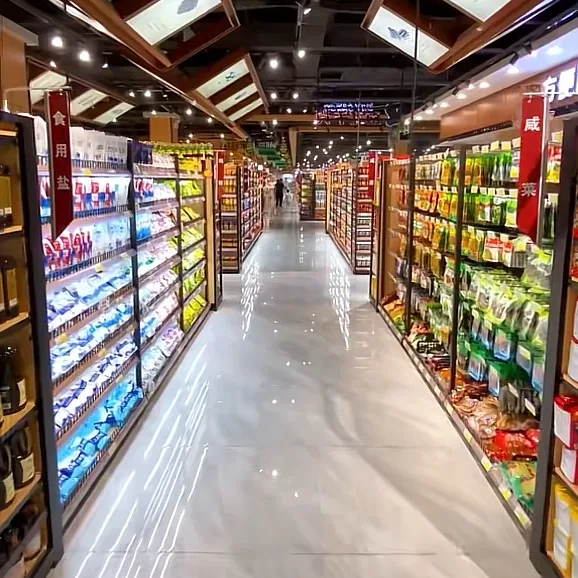
Setting Shelf-Level Specs for Product-Focused Retail Lighting
Ceiling accent spots do their best work on feature walls and end caps, where a narrow beam has a clear path. On a packed gondola, that beam can be blocked before it reaches a stocked middle shelf. The aisle may look bright while the second or third shelf remai
Best Grocery Store Categories for LED Shelf Lighting: A Buyer's Guide
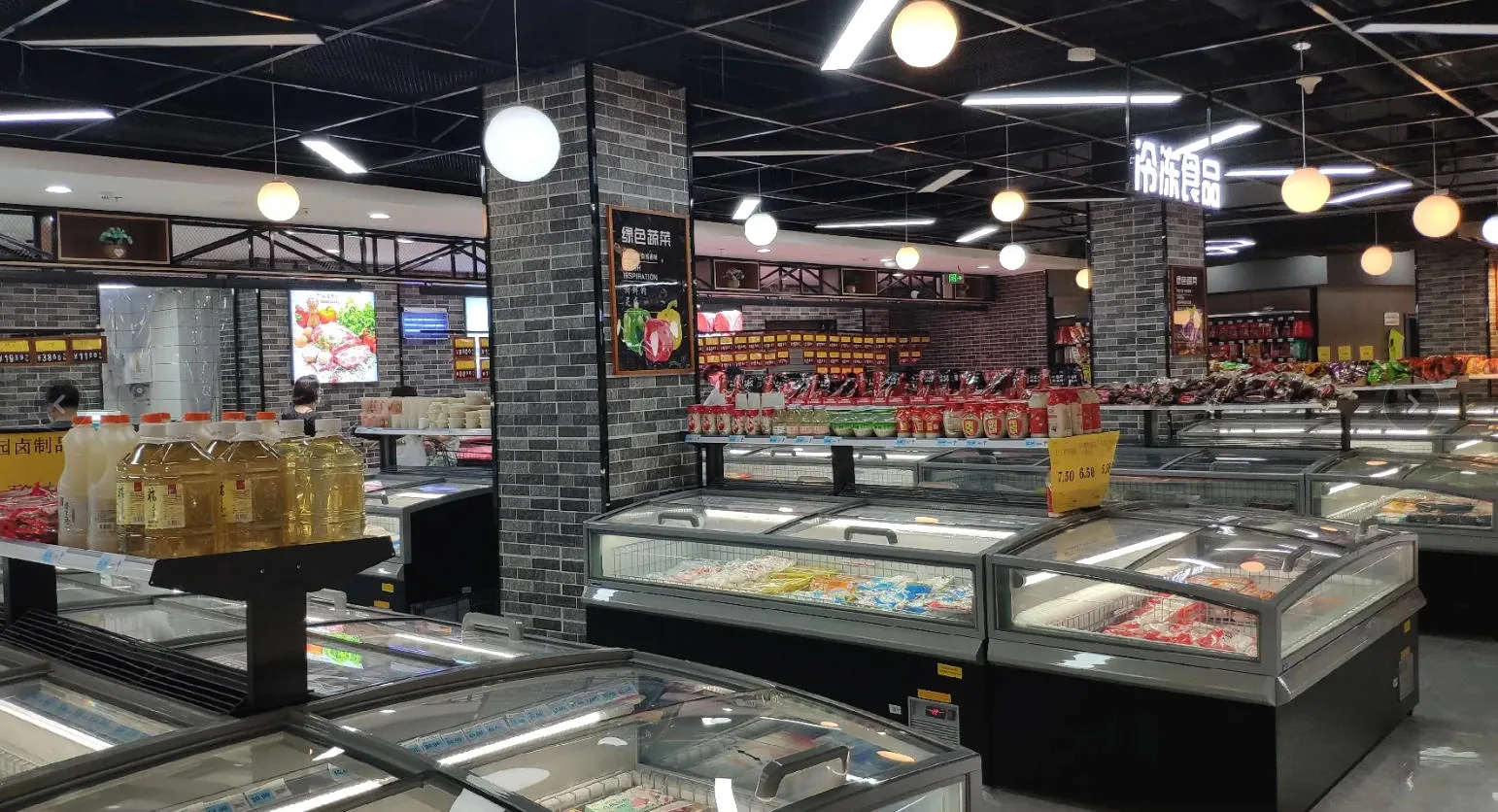
Not every shelf in a grocery store needs the same light. A deli case and a beverage cooler serve different products, different shoppers, and different margins. But one thing is consistent: grocery store shelf lighting directly affects how shoppers see and buy
Why Retail Chains Are Installing Shelf Lighting Without an Electrician in 2026
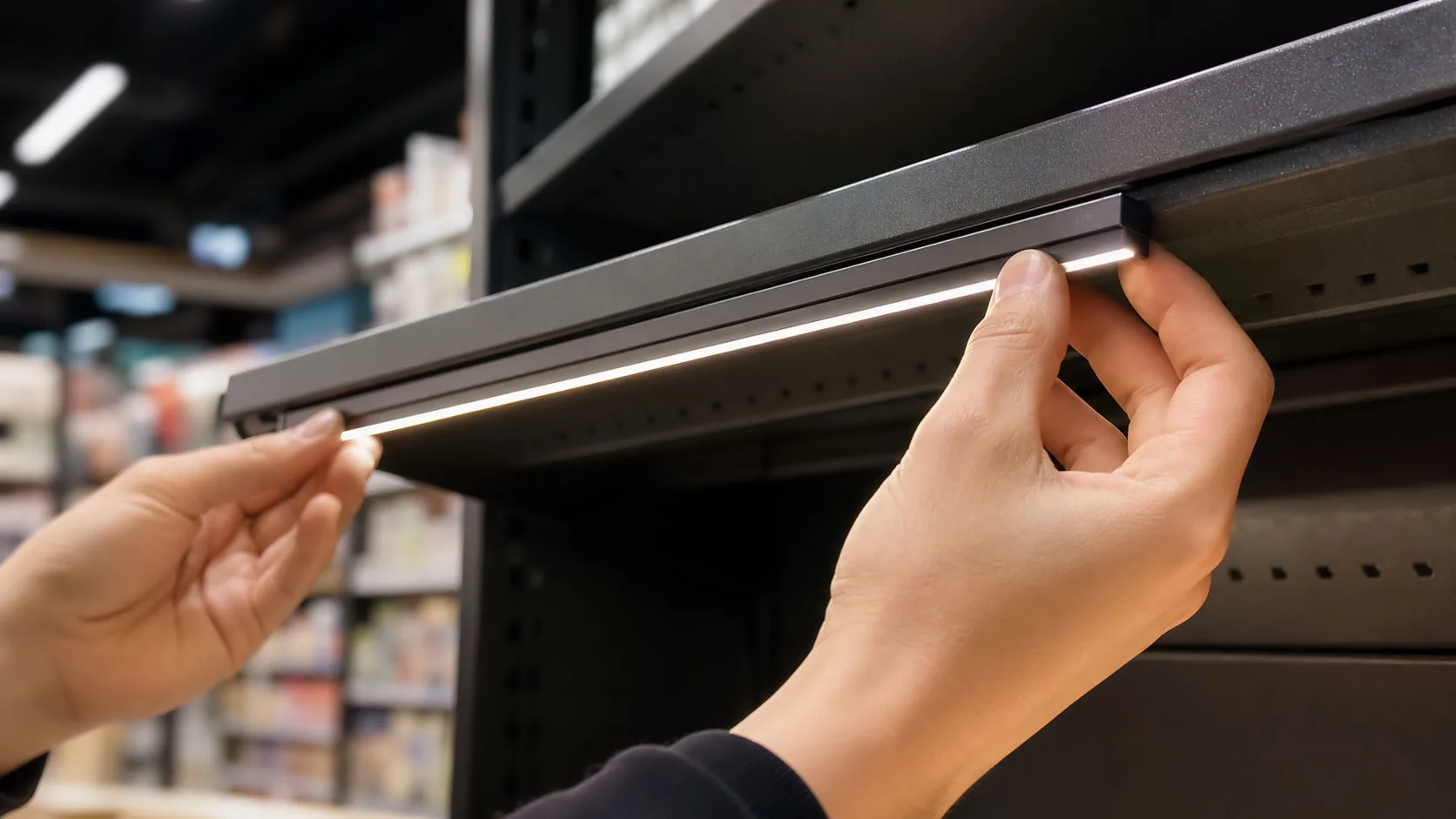
Every retail chain that has upgraded shelf lighting in the past decade has hit the same wall: the fixture is ready, the budget is approved, and then you have to wait three weeks for a licensed electrician to wire it. That wall is becoming less necessary. In 20
How Retailers Are Cutting Energy Costs 20-40% With LED Shelf Lighting Upgrades
Retail stores waste 25-35% of the energy they consume, according to the US Environmental Protection Agency. For a single-location store, that waste translates to $9,000-$18,000 per year in preventable spending. Across a 10-store chain, you are looking at $90,0