

Retail Lighting Trends 2026: Minimal Design, Human-Centric Light, and Smart IoT
The retail lighting trends 2026 are shaped by three converging forces: consumer demand for cleaner store aesthetics, growing evidence that light quality affects purchasing behavior, and the rapid cost reduction of IoT sensor technology. Retailers who understan
On this page
The retail lighting trends 2026 are shaped by three converging forces: consumer demand for cleaner store aesthetics, growing evidence that light quality affects purchasing behavior, and the rapid cost reduction of IoT sensor technology. Retailers who understand these shifts — and source lighting that addresses all three — are positioning themselves for measurable advantages in energy cost, shopper dwell time, and brand perception.
This article breaks down each trend from a manufacturer’s perspective: what’s changing, why it matters, and which product specifications to prioritize.
Table of Contents
- Why 2026 Is a Turning Point for Retail Lighting
- Trend 1: Minimal and Integrated Lighting Design — When the Luminaire Disappears
- Trend 2: Human-Centric Lighting — Designing for Shoppers’ Well-Being
- Trend 3: Smart IoT Integration — Sensors, Automation, and Data at the Fixture Level
- How These 3 Retail Lighting Trends Work Together in a Modern Store
- Spec Checklist: What to Demand from Your Retail Lighting Supplier in 2026
- Why Choose ARMOR as Your Retail Lighting Partner
- Frequently Asked Questions
Why 2026 Is a Turning Point for Retail Lighting
Three market forces are reshaping store lighting design 2026 more than any year in the past decade.
First, LED adoption in retail has crossed a threshold. According to ENERGY STAR, LED fixtures now account for the majority of new commercial lighting installations in North America and Europe. The energy savings alone — 40–60% reduction compared to traditional fluorescent or halogen systems — make the case for retrofit. But energy cost is no longer the only driver.
Second, the “experience economy” is pushing retailers to treat lighting as a design element, not just an operational utility. Fixtures are expected to integrate with architecture, not sit on top of it. Customers notice the light, not the luminaire. That expectation is driving the minimal integrated lighting movement across commercial lighting trends in 2026.
Third, energy cost pressure from rising electricity prices in Europe and Asia is accelerating the business case for smart controls. Retailers running older lighting systems are paying significantly more per square meter than competitors who have upgraded to sensor-controlled LED fixtures.
These three forces — LED maturity, design expectations, and cost pressure — converge in the three retail lighting trends we break down below.
Trend 1: Minimal and Integrated Lighting Design — When the Luminaire Disappears
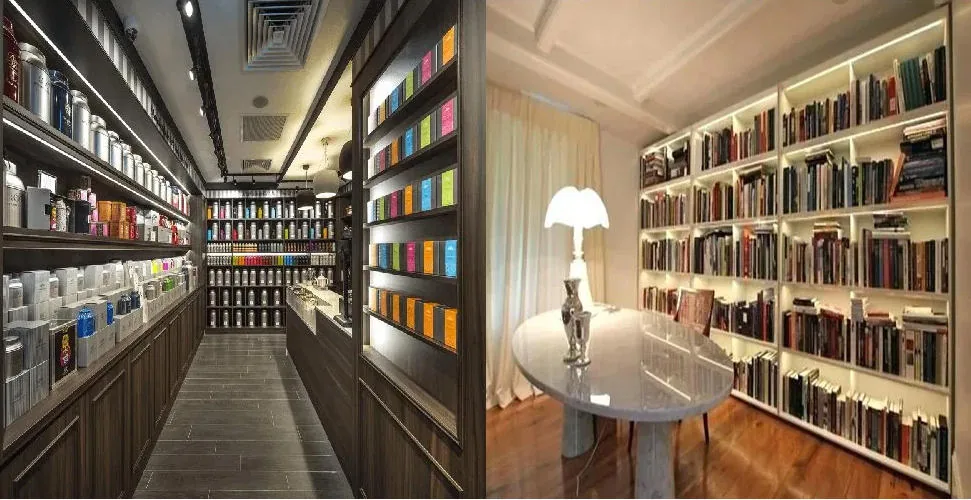
Minimal integrated lighting is a design approach where fixtures are concealed within the building structure. The light is visible. The luminaire is not. In retail, this means trimless recessed ceiling fixtures, flush-mounted panels, and shelf-level LED bars so slim they vanish into the merchandising display.
What “minimal” means in a retail context
For years, retail lighting was an afterthought — fluorescent tubes behind plastic diffusers, bulky track heads bolted to ceilings, and clamp-on shelf lights with visible wires. The 2026 trend toward architectural integration reverses that. Store designers now specify lighting as part of the architectural plan, not as an add-on.
Fixtures sit flush with ceiling tiles. LED rigid bars embed into shelf channels. Track systems recess into ceiling grids with no visible housing. The result is a clean visual field where product displays dominate and lighting equipment disappears.
How ultra-slim LED rigid bars make it possible
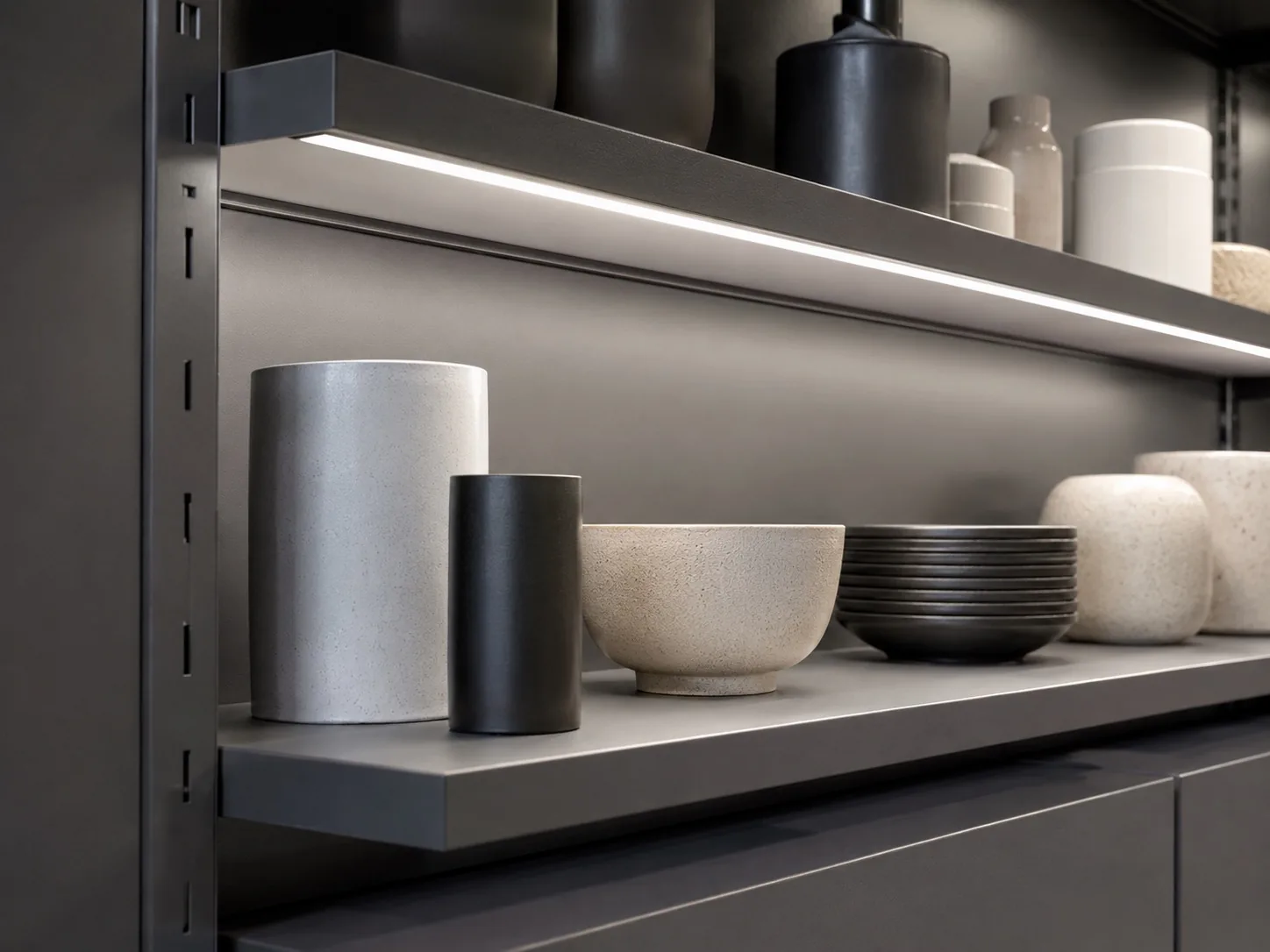
The engineering challenge has been profile thickness. A conventional LED shelf light might be 25–30mm deep — too bulky for most standard shelving channels. ARMOR’s slim magnetic LED rigid bar measures just 14mm × 10mm and uses magnetic snap-on mounting, so it installs on any steel surface without drilling, screws, or adhesives.
This ultra-slim profile is a direct enabler for the minimal integrated lighting trend. At 10mm height, the bar fits inside standard shelf channels and becomes invisible from the shopper’s perspective. The DC24V constant voltage design keeps wiring simple, and the magnetic mounting means store staff can reposition fixtures during merchandising changes without tools.
For deeper technical detail on tool-free installation, see our article on magnetic LED bar light expansion.
Mid-article CTA: Looking to spec minimal integrated lighting for your next store project? Browse ARMOR’s LED shelf lighting product range or contact us for a custom quote.
Trend 2: Human-Centric Lighting — Designing for Shoppers’ Well-Being
Human-centric lighting (HCL) uses tunable white LED technology to align artificial light with the body’s circadian rhythm — the 24-hour biological clock that influences alertness, mood, and comfort. In retail, HCL is gaining traction because the right color temperature at the right time measurably affects how long shoppers stay and how appealing products look.
The market is growing fast
The numbers tell the story. According to MarketsandMarkets, the global human-centric lighting market was valued at USD 3.66 billion in 2024 and is projected to reach USD 25.25 billion by 2036, growing at a 17.1% CAGR. Retail is one of the fastest-adopting sectors, alongside healthcare and office environments. The WELL Building Standard has formalized light quality requirements that increasingly influence how retail chains specify their lighting systems.
Tunable CCT across retail zones
A tunable white LED system lets you adjust color temperature (CCT) from warm 2700K to cool 6500K — essentially a “dimmer for light color.” Different store zones benefit from different settings:
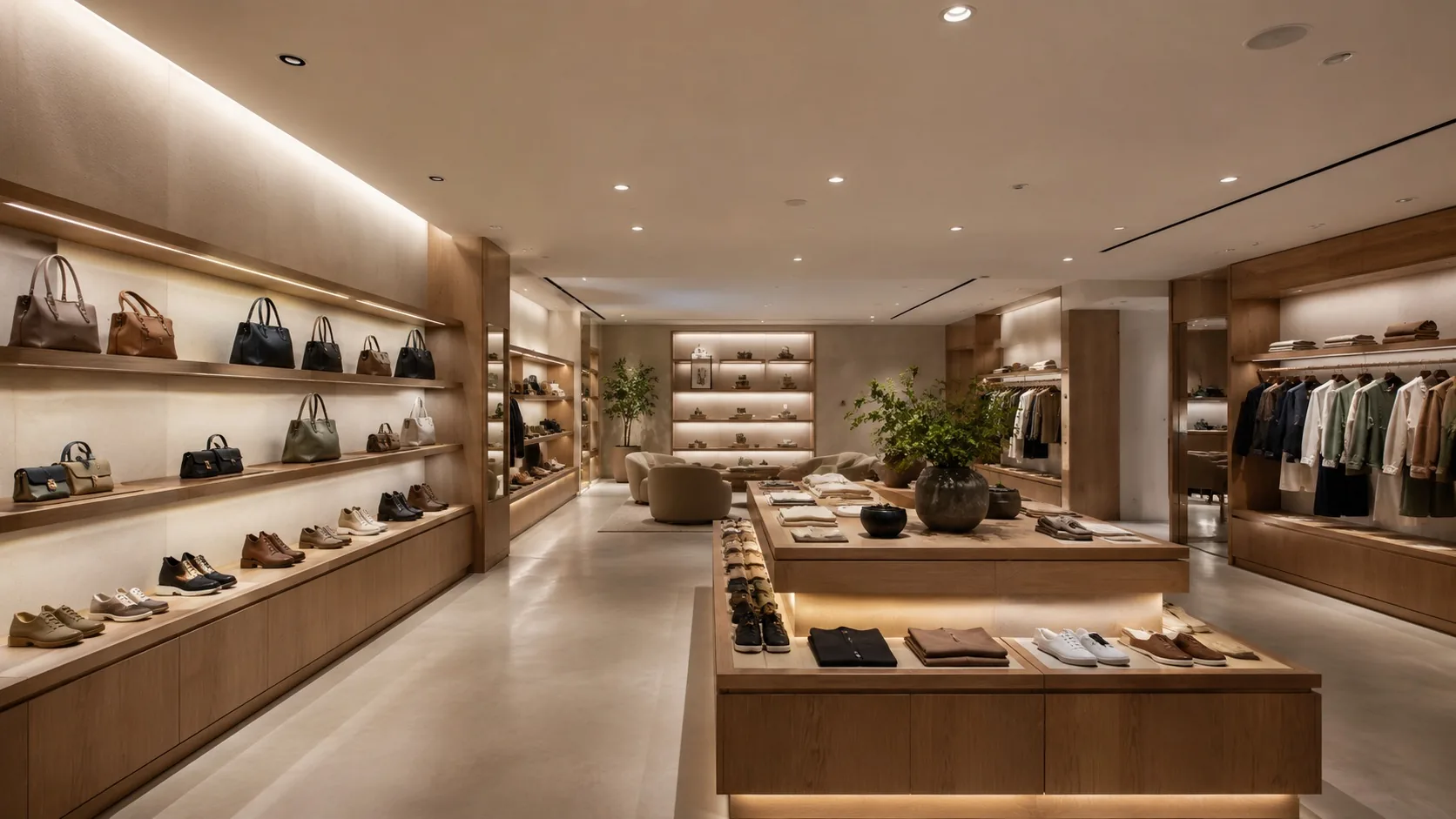
- Luxury and apparel — Warm white (2700K–3000K) creates an intimate atmosphere that flatters skin tones and fabric textures.
- General merchandise — Neutral white (3500K–4000K) provides balanced, accurate color rendering for electronics, home goods, and packaged products.
- Fresh food — Cool white (5000K–6500K) enhances the visual freshness of produce, bakery items, and dairy.
Biophilic lighting, a related concept, takes this further by programming LED systems to shift throughout the day — warmer in the morning, cooler at midday, warmer again in the evening — mimicking natural daylight progression and supporting the circadian rhythm of both shoppers and staff.
CRI 95+ for fresh food: a measurable sell-through advantage
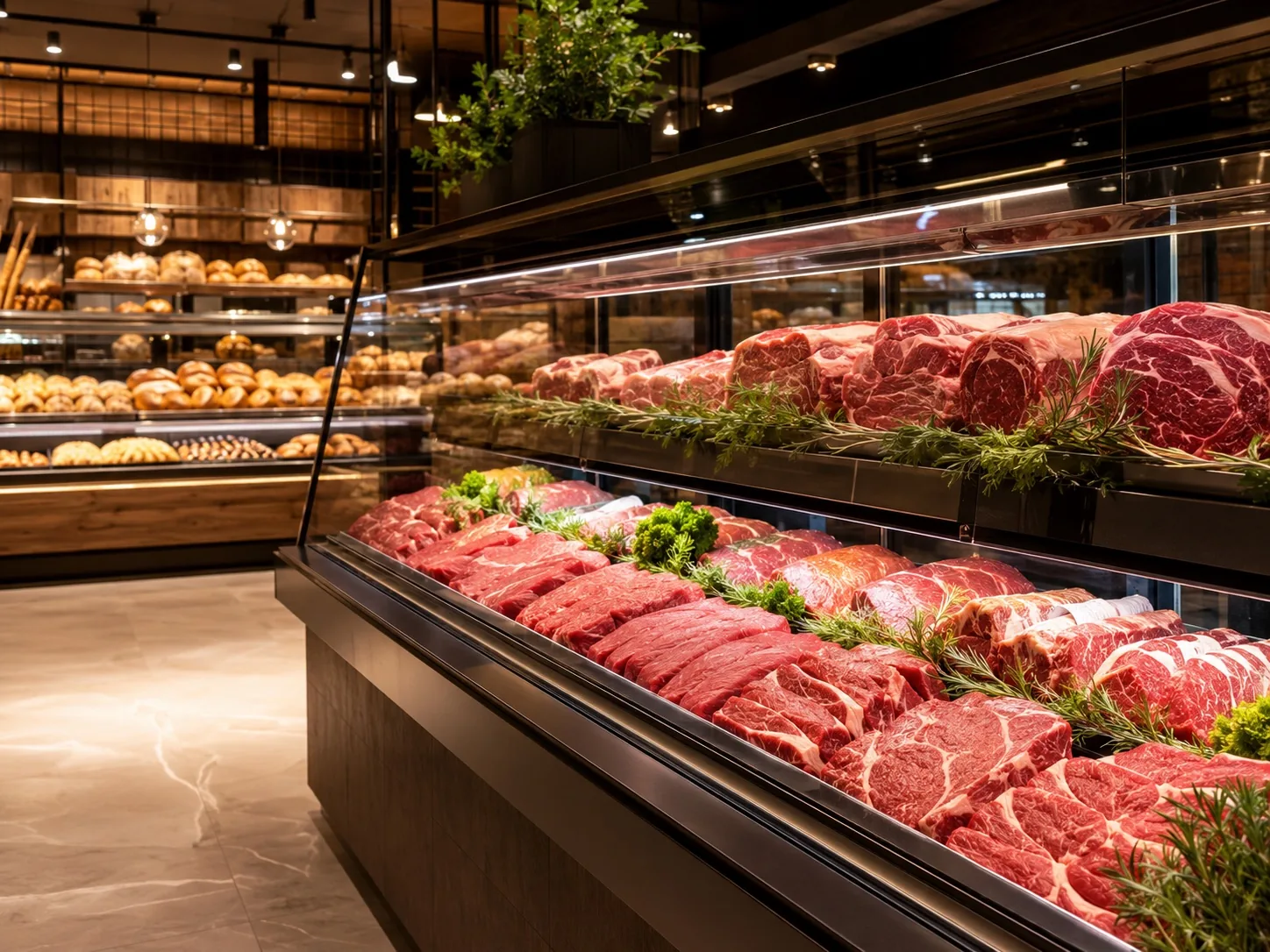
Color Rendering Index (CRI) measures how accurately a light source reveals the true colors of objects. At CRI 80, red meat appears brownish. Greens look dull. The visual appeal of fresh food drops, and so do sales.
At CRI 95+, the natural red tones of fresh beef are accurately rendered. Bakery products show golden warmth. Produce looks vibrant. Retailers using CRI 95+ lighting in fresh food zones report up to 20% better sell-through rates compared to stores lit at CRI 80.
ARMOR’s CRI 95+ fresh food LED lighting is built for this exact application — adjustable CCT from 2700K to 6500K, IP44 splash resistance for refrigerated display cases, and CRI 95+ across the full tunable range. For a deeper look at how CRI and wireless technology work together in modern retail, see our article on why CRI 95+ and wireless tech matter for invisible retail lighting.
Trend 3: Smart IoT Integration — Sensors, Automation, and Data at the Fixture Level
Smart IoT retail lighting means embedding sensors and wireless control directly into lighting fixtures — not relying on a separate building management system to do the job. The difference matters: fixture-level automation gives each light source its own intelligence, while whole-building IoT (systems from companies like Lutron or Siemens) controls lighting as part of a centralized infrastructure.
Both approaches save energy. But fixture-level integration is simpler to deploy, costs less per zone, and doesn’t require rewiring the building.
The energy savings are substantial
IoT-enabled smart lighting reduces energy consumption by up to 60% compared to standard LED systems running without sensors. The smart retail market is growing at 29% CAGR through 2030 (Grand View Research), and lighting is one of the first IoT touchpoints retailers adopt because the ROI is immediate and measurable.
Two key sensor types
Occupancy sensors detect motion in a retail zone and automatically dim or switch off lights when the area is empty. In stockrooms, fitting rooms, and off-peak aisle sections, occupancy-driven dimming can cut energy use by 30% on its own.
Daylight harvesting sensors measure the amount of natural light entering through windows and skylights, then adjust artificial lighting output accordingly. Stores with large window frontage often over-illuminate the first 5–10 meters of floor space during daylight hours. Daylight harvesting sensors prevent that waste automatically.
Wireless power tracks: fixture repositioning without rewiring
The wireless power track system takes IoT flexibility one step further. ARMOR’s wireless power track system uses a conductive rail that powers LED fixtures magnetically — no wiring, no electrician, no store downtime. When a retailer reconfigures a display, staff simply slide fixtures along the track or snap them to a new position.
This is fixture-level automation in its most practical form: the physical infrastructure adapts to merchandising changes in seconds. To understand the technical mechanism behind wireless conductive power delivery, see our detailed breakdown of how wireless conductive technology powers retail shelf lighting.
Combined with occupancy sensors and daylight harvesting, wireless power track systems give retailers a complete smart IoT lighting solution at the fixture level — without the cost and complexity of a centralized building management system.
How These 3 Retail Lighting Trends Work Together in a Modern Store
Each trend solves a different problem. Minimal integrated lighting handles aesthetics. Human-centric lighting handles shopper experience and product presentation. Smart IoT handles energy efficiency and operational flexibility. The real impact comes from combining all three into a zone-based lighting design.
Here’s how that works on a real store floor:
Aisles and general merchandise zones use trimless recessed ceiling fixtures (trend 1) at neutral white 4000K (trend 2), with occupancy sensors that dim lights during low-traffic hours (trend 3).
Fresh food counters use high-CRI 95+ tunable white LEDs (trend 2) in flush-mounted overhead fixtures (trend 1), with daylight harvesting sensors near windows (trend 3).
Shelf-level displays use ultra-slim 14mm magnetic LED rigid bars (trend 1) on wireless power tracks (trend 3), tunable to warm or cool white depending on the product category (trend 2).
Stockrooms and back-of-house use occupancy-sensor-controlled LED panels (trend 3) at a fixed 5000K for accurate picking (trend 2).
This holistic lighting strategy is what separates stores that adopted LED retrofits five years ago from stores being designed today. ARMOR’s product ecosystem — the slim magnetic LED rigid bar, the wireless power track system, and the CRI 95+ fresh food LED lighting series — covers all three trends with a single manufacturer, which simplifies procurement, installation, and after-sales support.
Spec Checklist: What to Demand from Your Retail Lighting Supplier in 2026
When evaluating LED retail lighting for a 2026 project, use this checklist to compare suppliers on the specifications that matter:
- CRI ≥ 95 — non-negotiable for fresh food; recommended for all zones
- Tunable CCT range 2700K–6500K — enables human-centric lighting and zone-specific color temperature
- IP44+ splash resistance — required for refrigerated and fresh food display cases
- DALI or 0-10V dimming protocol — ensures compatibility with standard smart building controls
- Sensor-ready connectors — occupancy and daylight harvesting sensor integration at the fixture level
- Magnetic or tool-free mounting — reduces installation time and allows fixture repositioning
- DC24V constant voltage — simplified wiring architecture for shelf-level systems
- ISO 9001-certified manufacturing — consistent quality control across production batches
How traditional, LED, and smart LED lighting compare
| Specification | Traditional (Fluorescent/Halogen) | Standard LED | Smart LED (IoT-Enabled) |
|---|---|---|---|
| Energy cost | Baseline | 40–60% lower | 60–75% lower |
| Fixture lifespan | 8,000–15,000 hrs | 50,000+ hrs | 50,000+ hrs |
| CCT flexibility | Fixed per tube | Fixed or limited | Fully tunable (2700K–6500K) |
| IoT integration | None | None or basic | Occupancy, daylight, wireless |
| Installation complexity | Low | Low | Low to moderate |
| Typical payback | N/A | 12–18 months | 12–18 months |
For reference on energy efficiency benchmarks, see ENERGY STAR LED lighting specifications. For industry-standard retail lighting recommendations, the Illuminating Engineering Society (IES) standards are the recognized authority.
Demanding these specifications from any supplier — not just ARMOR — gives you a framework for comparing quotes on equal terms.
Why Choose ARMOR as Your Retail Lighting Partner
ARMOR Lighting (华芒光电) is a Guangzhou-based B2B manufacturer specializing in LED retail display lighting, with retail lighting case studies from deployments across 50+ countries — including supermarket chains in Southeast Asia, boutique retailers in Europe, and mixed-use commercial projects in the Middle East and Latin America.
Every ARMOR product carries CE, RoHS, and DEKRA certifications. Our manufacturing facility operates under ISO 9001 quality management. The full product range — from LED shelf lighting to fresh food fixtures to wireless power tracks — is designed to work as an integrated ecosystem, so you can source from a single manufacturer for an entire store lighting project.
We provide OEM and ODM services. If your project requires custom dimensions, CCT ranges, or mounting configurations, our engineering team works directly with your lighting designers to spec the right solution.
Ready to spec your 2026 retail lighting project? Request a quote from ARMOR or browse our product catalog.
Frequently Asked Questions
What is minimal integrated lighting in retail?
Minimal integrated lighting means fixtures that disappear into the architecture — ultra-slim profiles as thin as 10–14mm, trimless recessed designs, and magnetic snap-on installation that keeps the shopper’s focus on merchandise, not the luminaire. It’s the dominant design direction in retail lighting trends 2026.
How does human-centric lighting benefit retail stores?
Human-centric lighting uses tunable white LEDs to mimic natural daylight patterns, supporting the body’s circadian rhythm. In retail, CRI 95+ tunable lighting makes fresh food look more appealing — retailers report up to 20% better sell-through rates — and creates a more comfortable shopping environment that encourages longer dwell time.
What IoT sensors are used in smart retail lighting?
The two primary sensor types are occupancy sensors (which dim or switch off lights when zones are empty) and daylight harvesting sensors (which adjust output based on natural light levels). Wireless power tracks add a third layer of flexibility by letting you reposition fixtures without rewiring. Together, these form a complete fixture-level automation system.
What CRI should retail display lighting have?
For general retail, CRI 90+ is recommended. For fresh food — meat counters, bakeries, and produce aisles — CRI 95+ is the minimum. At CRI 80, reds and browns look distorted, which directly reduces sell-through rates. The difference between CRI 80 and CRI 95+ is visible to every shopper, even if they can’t name it.
How much energy can LED lighting save a retail store?
LED retrofits typically save 40–60% on lighting energy compared to fluorescent or halogen fixtures. When you add IoT occupancy sensors and daylight harvesting, savings reach 60–75%. The typical payback period is 12–18 months, depending on operating hours and local electricity rates.
What color temperature is best for retail environments?
It depends on the zone. Warm white (2700K–3000K) suits luxury and apparel. Neutral white (3500K–4000K) works for general merchandise. Cool white (5000K–6500K) is best for fresh food and high-detail areas. Tunable white LED systems let you adjust per zone — and shift throughout the day for biophilic lighting effects.
How do I upgrade my store lighting to LED?
Start with a lighting audit of your current fixtures. Replace high-usage fixtures first — aisles, display cases, and checkout areas. Choose magnetic LED bars for shelf lighting to avoid drilling and store downtime. Use wireless power track systems for flexible repositioning as merchandising changes. Demand CRI 95+ and sensor-compatible fixtures from your supplier.
Planning a Retail Lighting Project?
Need help applying this lighting approach to your fixture?
If you're evaluating retail lighting, fixture lighting, or lighting configuration for a fixture, tell us what you're working on.
Related to what you're reading
Retail Lighting Trends 2026: Minimal Design, Human-Centric Light, and Smart IoT
Related Articles
View All Articles »
Gondola Shelving Lighting: How to Choose, Install, and Boost Product Visibility
Walk into any supermarket or convenience store and look up. The overhead fluorescent tubes do an acceptable job lighting the aisles. Now look at the shelves themselves. The products on the second, third, and fourth rows sit in their own shadow, washed out unde
How Color Temperature and CRI in Retail Lighting Influence Buying Decisions
Color temperature CRI retail lighting decisions affect your bottom line more than most store owners realize. Two stores can stock identical products, price them the same, and still see a 20-40% gap in sales — and the difference often comes down to what's hangi
How Retailers Are Cutting Energy Costs 20-40% With LED Shelf Lighting Upgrades
Retail stores waste 25-35% of the energy they consume, according to the US Environmental Protection Agency. For a single-location store, that waste translates to $9,000-$18,000 per year in preventable spending. Across a 10-store chain, you are looking at $90,0
How Wireless Conductive Technology Powers Retail Shelf Lighting Without Wires
Wireless conductive shelf lighting delivers power through conductive surfaces integrated directly into a shelf rail profile. LED bars snap magnetically into the track and receive electricity through contact points — no traditional wiring, no batteries, no exte