

Gondola Shelving Lighting: How to Choose, Install, and Boost Product Visibility
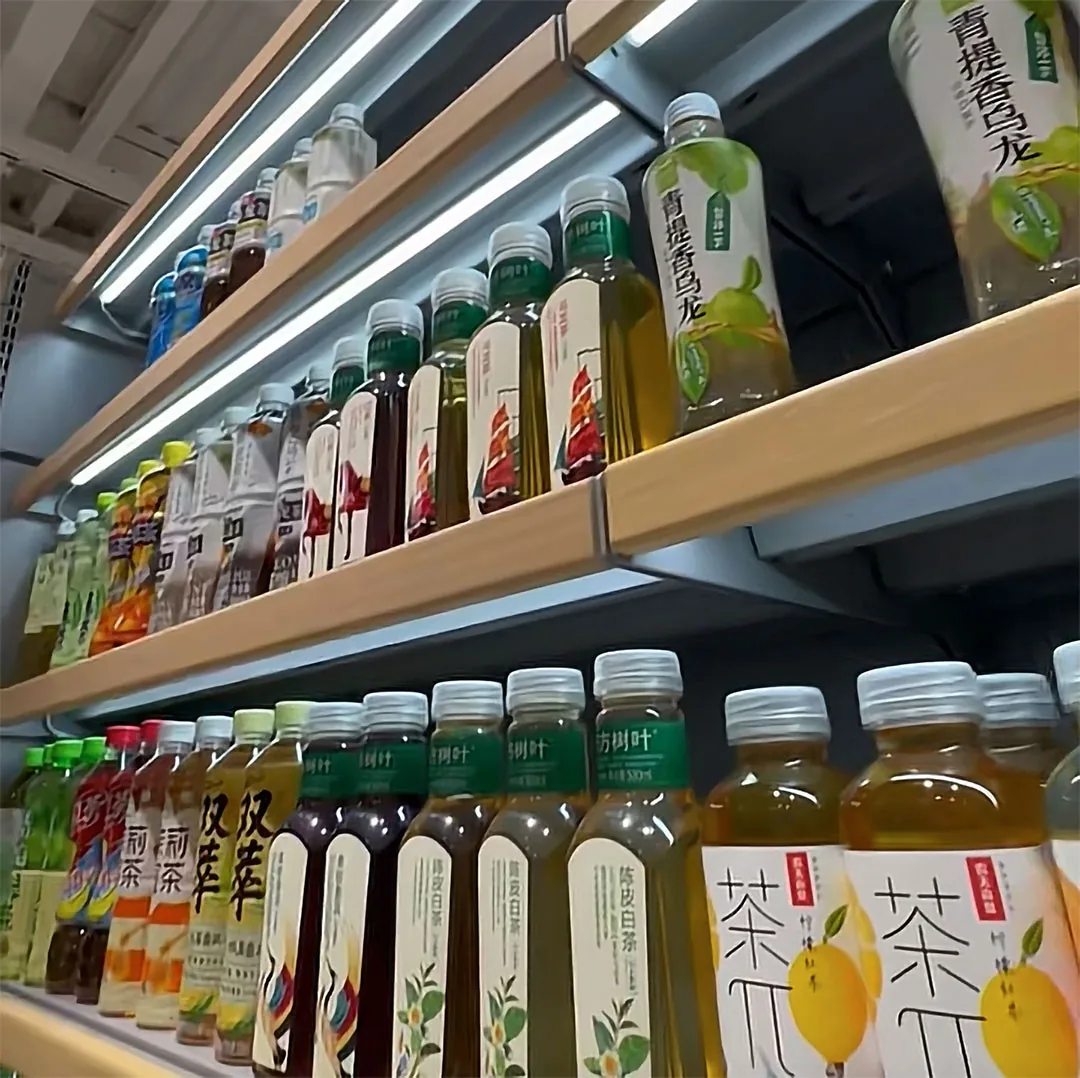
Walk into any supermarket or convenience store and look up. The overhead fluorescent tubes do an acceptable job lighting the aisles. Now look at the shelves themselves. The products on the second, third, and fourth rows sit in their own shadow, washed out unde
On this page
Walk into any supermarket or convenience store and look up. The overhead fluorescent tubes do an acceptable job lighting the aisles. Now look at the shelves themselves. The products on the second, third, and fourth rows sit in their own shadow, washed out under flat, indirect light that barely reaches below the shelf lip above them.
Gondola shelving lighting solves this problem at the shelf level. It places focused LED light directly onto the merchandise, where customers make purchasing decisions. For store owners, distributors, and fixture buyers, the right gondola shelf lighting system can increase product visibility, shorten the time shoppers spend searching, and lift per-shelf revenue.
This guide covers every aspect of gondola shelving lighting: what it is, why it matters, which LED system type fits your store, how to read the specs, how to install it, how many bars you need per shelf section, and what the real numbers look like on cost and payback.
What Is Gondola Shelving Lighting?
Gondola shelving lighting refers to LED fixtures mounted on or under the shelves of a gondola display unit. A gondola is a freestanding, double-sided retail shelving system made of metal uprights, bases, and adjustable shelves. Retailers use gondolas to create aisles in supermarkets, pharmacies, convenience stores, liquor shops, and hardware stores.
Overhead lighting reaches the top shelf and the floor well enough. The middle shelves, where most high-margin products sit, get caught in a shadow zone. The shelf above blocks the ceiling light. The result: dark pockets where product labels look dull, colors shift, and customers pass by without noticing.
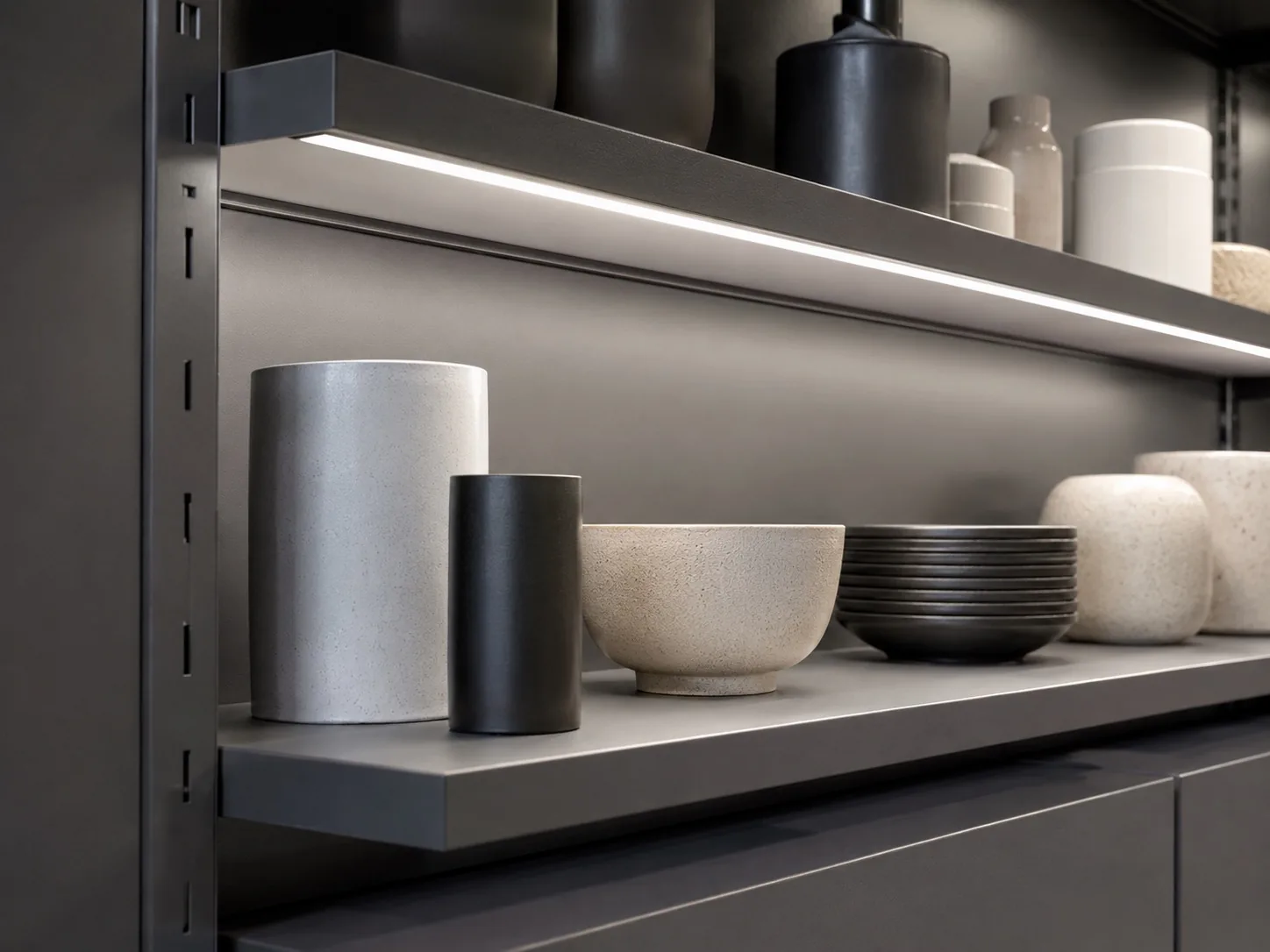
Gondola shelf lighting fixes this by mounting a linear LED fixture under each shelf, directing a narrow beam of light onto the shelf below it. Each shelf lights the one beneath it, creating even illumination from top to bottom of the entire gondola unit.
The fixtures themselves come in several forms: rigid aluminum LED bars, track-mounted LED modules, flexible LED strips, and wireless conductive track systems. Each type has different installation requirements, cost profiles, and best-fit scenarios.
Why Gondola Shelf Lighting Matters for Retail Sales
The commercial case for gondola shelf lighting comes down to one number: product visibility drives purchasing behavior.
A study published in the Journal of Retailing found that shoppers are 30% more likely to notice and pick up a product when it is individually lit versus relying on ambient overhead light alone. The National Retail Federation reports that visual merchandising, including shelf-level lighting, influences up to 70% of in-store purchase decisions.
For store owners, the math works like this:
- A convenience store with 200 linear feet of gondola shelving and no shelf lighting loses visibility on roughly 60% of its displayed products (the middle and lower rows).
- Adding LED gondola lights to those shelves typically costs $2,000 to $5,000 depending on the system type.
- If the store generates $30,000 per month in revenue, and better shelf visibility lifts sales even 3%, that is $900 per month, or $10,800 per year. The payback period lands between 3 and 6 months.
Beyond the sales lift, LED gondola lighting also reduces energy consumption compared to older fluorescent under-shelf tubes. Modern LED rigid bars consume 3 to 7 watts per shelf versus 15 to 20 watts for a comparable fluorescent tube. The U.S. Department of Energy confirms that LED lighting uses at least 75% less energy than incandescent options and lasts up to 25 times longer. Across a full store, the energy savings alone can offset the lighting investment within the first year.
Dark shelves also create a perception problem. Shoppers associate dim lighting with old inventory, clearance bins, or low-quality products. Well-lit shelves signal that the store maintains its displays and pays attention to detail.
Types of LED Gondola Lights: Magnetic, Track, and Strip Systems
Three main types of LED gondola lights dominate the retail market. Each uses a different mounting method and suits different store environments.
Magnetic LED rigid bars
A magnetic LED rigid bar is a thin aluminum extrusion with LEDs mounted on a rigid PCB and magnets embedded in the housing. The bar snaps onto the underside of any ferrous metal shelf with no tools, no screws, and no drilling.
Magnetic bars work on standard Lozier, Madix, and similar gondola systems because those shelves use steel. The magnets hold the bar in place even when shelves are adjusted or rearranged. Installation per shelf takes under 30 seconds.
ARMOR’s slim magnetic LED rigid bar comes in a 10mm profile, which fits into the tight gap between shelf lip and the shelf below it. The 14mm version offers higher lumen output for deeper shelves.
Best for: Stores that need fast installation, frequent shelf rearrangement, or retrofit onto existing gondola systems. Most common choice for supermarkets, pharmacies, and convenience stores.
Track and rail systems
A track system mounts a power rail along the gondola upright or shelf bracket. LED modules plug into the track and slide to any position along it. Power runs through the track itself, so each LED module does not need its own wire run back to the power supply.
Wireless conductive track systems go a step further. The track carries both power and signal without exposed wires, giving a clean look while allowing shelves to move up and down without rewiring.
ARMOR’s wireless power track system uses this approach. The track mounts to the gondola upright, and magnetic LED bars click into the track at any height. Store staff can move shelves and the lighting moves with them.
Best for: New store builds or planned renovations where the store wants a clean, integrated lighting system. Higher upfront cost, but the lowest long-term maintenance burden.
Flexible LED strips
Flexible LED strips are adhesive-backed ribbon lights that stick to the underside of a shelf. They cost less per foot than rigid bars and can bend around curved shelving or irregular shapes.
The trade-off: adhesive strips can peel off over time in warm environments (like bakeries or near refrigeration units). They also lack the focused beam angle of a rigid bar, so light spreads wider but with less intensity on the products below.
Best for: Budget-sensitive installs, curved or non-standard shelving, or supplemental accent lighting on end caps and feature displays.
Comparison table
| Feature | Magnetic rigid bar | Track system | Flexible strip |
|---|---|---|---|
| Mounting | Magnetic snap | Rail + magnetic | Adhesive |
| Tools needed | None | Basic (screwdriver) | None |
| Install time per shelf | Under 30 seconds | 2 to 5 minutes | 1 to 2 minutes |
| Shelf rearrangement | Move with shelf | Adjust in track | Remove and restick |
| Beam angle | 120 to 160 degrees | 120 to 160 degrees | 180 degrees (wide) |
| Durability | High (aluminum housing) | High | Moderate |
| Cost per linear foot | $3 to $8 | $8 to $15 | $1 to $4 |
| Best for | Retrofit, flexible layout | New builds, clean look | Budget, curved shelves |
Key Specs to Compare: CRI, Color Temperature, Beam Angle, and Wattage
Shopping for gondola shelving lighting means comparing technical specifications. Four specs matter most for retail shelf applications.
CRI (Color Rendering Index)
CRI measures how accurately a light source renders the true color of an object compared to natural daylight. The scale runs from 0 to 100.
- CRI 80: Acceptable for general merchandise. Colors look reasonable but not exact. Common in budget LED fixtures.
- CRI 90+: Colors look natural and true. Fresh food, cosmetics, clothing, and packaged goods all benefit from CRI 90 or above.
- CRI 95+: Premium color accuracy. Recommended for meat counters, bakery displays, and any product where color drives the purchase decision.
For most gondola shelf applications, CRI 90 hits the sweet spot between color accuracy and cost. ARMOR’s LED rigid bars use CRI 90+ LEDs as standard. See our detailed guide on color temperature and CRI in retail lighting for a deeper breakdown.
Color temperature (CCT)
Color temperature, measured in Kelvin (K), describes the warmth or coolness of the light.
- 2700K to 3000K (warm white): Creates a cozy, inviting atmosphere. Best for bakeries, delis, wine shops, and specialty food stores.
- 3500K to 4000K (neutral white): The most versatile choice. Works for general grocery, pharmacy, convenience, and hardware stores. Clean without being clinical.
- 5000K to 6500K (cool/daylight white): Bright, alert feel. Used in electronics stores, outdoor sections, or where a high-energy atmosphere suits the brand. Can look harsh on food products.
Most retailers choose 4000K for gondola shelving because it balances product color accuracy with a comfortable shopping environment.
Beam angle
Beam angle determines how wide or narrow the light spreads from the fixture.
- 120 degrees: A focused beam that creates a pool of light on the shelf below. Good for narrow shelves (10 to 14 inches deep).
- 160 degrees: A wider spread that covers deeper shelves (16 to 22 inches) or double-row product displays.
- 180 degrees (strip lights): Nearly flat spread. Works for accent lighting but lacks the punch to illuminate product labels on deeper shelves.
Match the beam angle to your shelf depth. A 120-degree bar on a deep 20-inch shelf will leave the outer edges dim. A 160-degree bar on a narrow 12-inch shelf wastes light on the gondola upright.
Wattage and efficacy
LED gondola lights consume 3 to 12 watts per bar depending on length and lumen output. The key metric is efficacy: lumens per watt.
- 80 to 100 lumens per watt: Standard commercial grade. Adequate for most retail.
- 100 to 130 lumens per watt: High efficiency. Reduces energy consumption and heat output.
- 130+ lumens per watt: Premium efficiency, typically found in specification-grade fixtures for large chain deployments.
A 4-foot rigid bar at 100 lumens per watt and 7 watts produces about 700 lumens, enough to light a standard 4-foot gondola shelf section evenly.
How to Install Gondola Shelving Lighting: Magnetic vs. Track vs. Hardwired
Installation method determines how much time, labor, and disruption the lighting project requires.
Magnetic installation (DIY-friendly)
- Unbox the LED rigid bar and power supply.
- Snap the bar onto the underside of the metal shelf. The magnets hold it in place.
- Connect the bar’s DC cable to the power supply or daisy-chain connector.
- Plug in the power supply.
- Test the light. Adjust position if needed.
Time: under 30 seconds per shelf. No tools. No electrician. A store associate can light an entire gondola run during a shift.
Track system installation (moderate complexity)
- Mount the power track to the gondola upright using the provided clips or screws.
- Route the power cable from the track to the driver (power supply).
- Snap LED modules into the track at the desired shelf heights.
- Connect the driver to a power outlet.
- Test all modules.
Time: 2 to 5 minutes per shelf. Requires a screwdriver for the track mounting. The track itself takes 15 to 20 minutes per gondola section to install. An electrician is helpful but not required for low-voltage DC systems (under 48V).
Hardwired installation (professional recommended)
Some older retail lighting systems use hardwired connections, where each LED fixture connects directly to a junction box or power bus via electrical wiring.
- Run low-voltage wire from the power supply to each shelf position.
- Strip, splice, and connect each LED fixture to the wire.
- Mount the fixture with screws or clips.
- Connect the power supply to the mains circuit.
Time: 10 to 15 minutes per shelf. Requires an electrician for mains connections. This method offers the most permanent installation but the least flexibility for shelf rearrangement.
Most new gondola shelving lighting projects use magnetic or track systems because they avoid the labor cost and disruption of hardwiring.
Calculating How Many LED Light Bars You Need per Gondola Section
A common question from store planners: “How many bars do I need?” The answer depends on shelf width, desired brightness, and the bar’s lumen output.
Step 1: Measure your shelf width.
Standard gondola shelves come in 3-foot, 4-foot, and 5-foot widths. Measure the actual usable display width, not the full bracket-to-bracket span.
Step 2: Determine target illuminance.
Retail shelf lighting targets vary by product category:
| Store type | Target (lux at shelf surface) |
|---|---|
| General grocery | 300 to 500 lux |
| Pharmacy | 500 to 750 lux |
| Cosmetics and beauty | 750 to 1000 lux |
| Electronics | 300 to 500 lux |
Step 3: Match bar output to shelf width.
Example: ARMOR’s 4-foot (1200mm) magnetic LED rigid bar produces approximately 700 lumens with a 120-degree beam angle. On a standard 4-foot shelf at 14 inches deep, one bar delivers roughly 400 to 500 lux at the product surface. That covers general grocery and convenience store applications.
For higher-lux applications (pharmacy, cosmetics), use two bars per shelf or choose a higher-output bar.
Step 4: Account for daisy-chaining.
Most LED rigid bar systems support daisy-chain connections, where one power supply drives multiple bars in series. A single 60W driver can typically power 8 to 10 bars (at 7W each). A 100W driver handles 12 to 15 bars.
Quick formula:
Number of bars = (Shelf width in feet / Bar length in feet) x Rows of shelves per gondola section
For a standard 4-shelf, 4-foot-wide gondola section with one bar per shelf: 4 bars per section, connected to one power supply.
Retrofitting Gondola Lighting onto Existing Shelving Systems
Most stores do not buy new gondola shelving to add lighting. They retrofit lighting onto what they already have. This works well because the majority of gondola systems in the market use steel shelves that accept magnetic mounting.
Compatible gondola brands
Magnetic LED rigid bars work on any gondola system with ferrous metal shelves, including:
- Lozier (the most common gondola brand in North America)
- Madix
- Streater
- Nabco
- Panel Processing (wooden shelves with metal brackets need adhesive or clip mounting)
Retrofit checklist
- Check shelf material. A magnet sticks to steel shelves. If the magnet does not hold, the shelf may be aluminum or plastic. Use adhesive mounting or a track system instead.
- Measure the gap between shelf underside and the shelf below. The LED bar needs clearance to fit. ARMOR’s 10mm slim bar fits gaps as narrow as 12mm.
- Locate the nearest power outlet. Plan the power supply location and cable routing before installing bars. Most DC power supplies plug into a standard outlet and can sit on the floor behind the gondola or mount to the upright.
- Plan for shelf height changes. If shelves move frequently, magnetic bars move with the shelf. If using a track system, adjust the LED module position in the track.
- Test one section first. Light one gondola section before committing to the full store. Verify brightness, color temperature, and beam angle against the actual products.
Gondola Shelving Lighting Cost and ROI Breakdown
Budget planning for a gondola shelving lighting project comes down to three variables: fixture cost, installation labor, and energy savings.
Fixture cost per shelf
| System type | Cost per 4-foot shelf (fixture only) |
|---|---|
| Magnetic LED rigid bar | $12 to $30 |
| Track system (per module) | $25 to $50 |
| Flexible LED strip | $5 to $15 |
For a typical 4-shelf gondola section using magnetic rigid bars, the fixture cost is $50 to $120 per section. Add $15 to $30 for the power supply and connectors.
Installation labor
- Magnetic system: zero labor cost (store staff install in seconds).
- Track system: 30 to 60 minutes per gondola section. At a contractor rate of $50 per hour, that adds $25 to $50 per section.
- Hardwired: 1 to 2 hours per section plus electrician fees ($75 to $150 per section).
Energy savings
A 4-shelf gondola section lit by LED rigid bars consumes about 28 watts (4 bars at 7W each). The equivalent fluorescent setup consumes 60 to 80 watts. The LED system saves 32 to 52 watts per section.
For a store with 50 gondola sections running 12 hours per day:
| Fluorescent | LED rigid bar | |
|---|---|---|
| Watts per section | 70 | 28 |
| Total watts (50 sections) | 3,500 | 1,400 |
| Daily consumption (12 hrs) | 42 kWh | 16.8 kWh |
| Monthly cost (at $0.12/kWh) | $151 | $60 |
| Annual cost | $1,814 | $726 |
| Annual energy savings | — | $1,088 |
Total project cost and payback
For a 50-section store using magnetic LED rigid bars:
- Fixtures and power supplies: $3,250 to $6,500
- Installation labor: $0 (magnetic, staff-installed)
- Annual energy savings: $1,088
- Estimated sales lift (3% on $30,000/month): $10,800/year
- Payback period: 3 to 4 months
Frequently Asked Questions
What type of lighting is best for gondola shelving?
LED rigid bars with magnetic mounting are the most popular choice for gondola shelving. They deliver focused, even light onto the shelf below, install in seconds without tools, and last over 50,000 hours. Magnetic bars work on standard steel gondola shelves from Lozier, Madix, and similar brands.
How many LED light bars do I need per gondola shelf?
One LED rigid bar per shelf covers most standard 3-foot and 4-foot gondola shelves for general retail. For deeper shelves (over 18 inches) or high-brightness applications like cosmetics and pharmacy, use two bars per shelf. Measure your shelf width and match it to the bar length.
Can I add lighting to existing gondola shelving without rewiring?
Yes. Magnetic LED rigid bars snap onto existing metal shelves with no wiring, no drilling, and no electrician. Each bar connects to a low-voltage DC power supply via a simple cable. Wireless conductive track systems also retrofit onto existing gondola uprights, letting you move shelves without rewiring the lights.
What color temperature is best for gondola shelf lighting?
3500K to 4000K (neutral white) works for most retail environments. Warm white (2700K to 3000K) suits bakeries, delis, and wine shops where a cozy atmosphere matters. Cool white (5000K to 6500K) fits electronics or outdoor gear displays. Test a sample bar on your actual products before committing to a full-store installation.
How much does gondola shelving lighting cost?
Magnetic LED rigid bar fixtures cost $12 to $30 per 4-foot shelf, with power supplies adding $15 to $30 per gondola section. A 4-shelf section costs $65 to $150 fully equipped. Installation is free with magnetic systems because store staff install them in seconds. A full 50-section store upgrade typically costs $3,250 to $7,500.
Do LED gondola lights need an electrician to install?
Magnetic LED rigid bars and most plug-and-play track systems do not need an electrician. They use low-voltage DC power (typically 24V) and connect with simple plug connectors. Hardwired systems that tie into mains circuits should be installed by a licensed electrician.
Gondola shelving lighting is one of the highest-return, lowest-disruption upgrades a retail store can make. The right LED system turns dark, overlooked shelf sections into visible, inviting product displays. Whether you retrofit 10 shelves or build out a 200-section supermarket, the process starts with choosing the right fixture type for your shelving system and your budget.
Browse ARMOR’s magnetic LED rigid bars and wireless power track systems to find the right gondola shelving lighting solution for your next project. For custom lengths, color temperatures, or large-volume orders, contact ARMOR for a quote.
Related Product Families
- Shelf & Cabinet Lighting
Browse ARMOR shelf and cabinet lighting products for retail fixtures, gondolas, showcases, and cabinets.
Retail Lighting →
Planning a Retail Lighting Project?
Need help applying this lighting approach to your fixture?
If you're evaluating retail lighting, fixture lighting, or lighting configuration for a fixture, tell us what you're working on.
Related to what you're reading
Gondola Shelving Lighting: How to Choose, Install, and Boost Product Visibility
Related Articles
View All Articles »
How Color Temperature and CRI in Retail Lighting Influence Buying Decisions
Color temperature CRI retail lighting decisions affect your bottom line more than most store owners realize. Two stores can stock identical products, price them the same, and still see a 20-40% gap in sales — and the difference often comes down to what's hangi
How Retailers Are Cutting Energy Costs 20-40% With LED Shelf Lighting Upgrades
Retail stores waste 25-35% of the energy they consume, according to the US Environmental Protection Agency. For a single-location store, that waste translates to $9,000-$18,000 per year in preventable spending. Across a 10-store chain, you are looking at $90,0
Retail Lighting Trends 2026: Minimal Design, Human-Centric Light, and Smart IoT
The retail lighting trends 2026 are shaped by three converging forces: consumer demand for cleaner store aesthetics, growing evidence that light quality affects purchasing behavior, and the rapid cost reduction of IoT sensor technology. Retailers who understan
How Wireless Conductive Technology Powers Retail Shelf Lighting Without Wires
Wireless conductive shelf lighting delivers power through conductive surfaces integrated directly into a shelf rail profile. LED bars snap magnetically into the track and receive electricity through contact points — no traditional wiring, no batteries, no exte