

China Customs Intensifies Magnetic Product Inspections — Impact on Magnetic Track and Shelf Lighting
China customs authorities have rolled out a strict new enforcement policy targeting all magnetic products for export. The rule is simple and uncompromising: any product containing magnetic components — regardless of magnet type or strength — is now flagged for
On this page
China customs
authorities have rolled out a strict new enforcement policy targeting all magnetic products for export. The rule is simple and uncompromising: any product containing magnetic components — regardless of magnet type or strength — is now flagged for mandatory inspection. For buyers and suppliers in the magnetic track lighting and LED shelf lighting sectors, this is not a minor paperwork adjustment. It is a supply chain disruption that affects lead times, shipping costs, and project planning.
The New Policy: No Magnetic Product Exempt
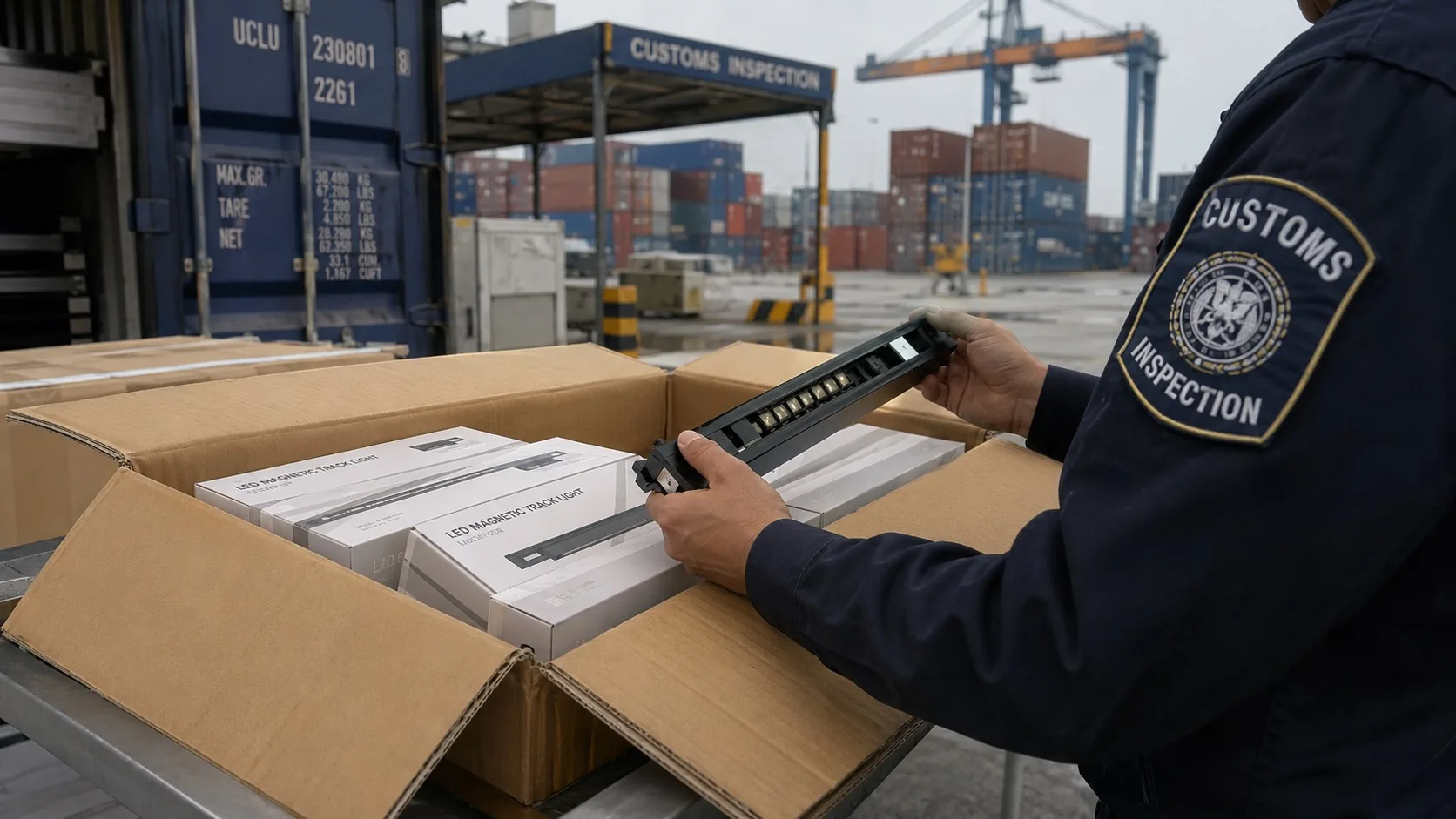
According to the latest customs directive, products with names or descriptions containing magnetic-related terms — including “magnet,” “magnetic,” and “magnetic suction” — trigger automatic risk alerts in the customs system. Once flagged, shipments undergo mandatory inspection and sampling. The key points:
- Automatic hold: Any product name with magnetic keywords is automatically routed for manual review
- No exceptions: The policy applies equally to common ferrite magnets, neodymium magnets, and magnetic assemblies embedded in lighting fixtures
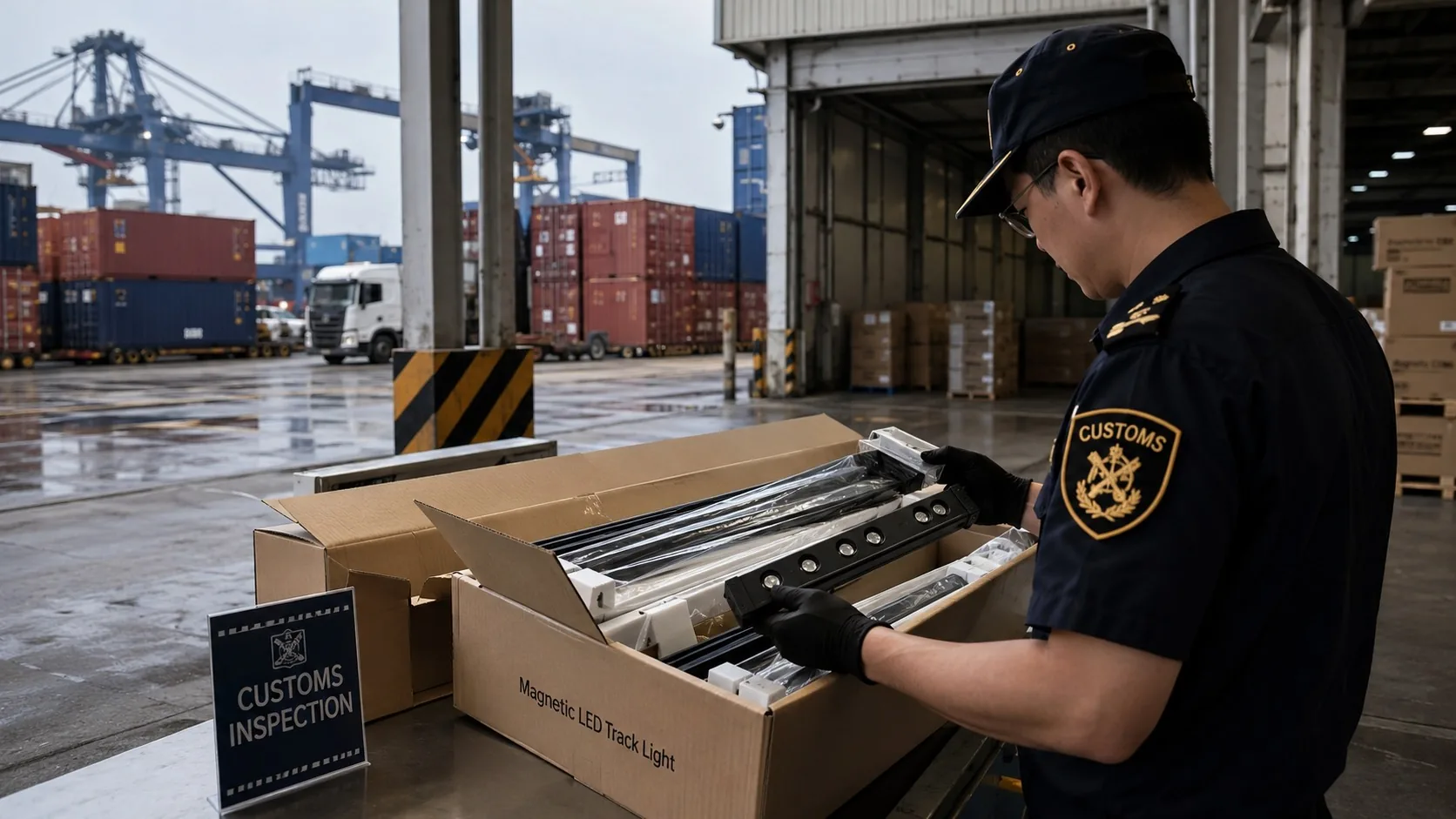
- Mandatory sampling: Customs officers cannot judge magnet type or strength on-site, so all flagged products are sent for laboratory testing
- Uncontrollable timeline: Testing periods vary and cannot be guaranteed
This means a magnetic LED rigid bar or magnetic track system — even one with a small mounting magnet — faces the same inspection protocol as a bulk neodymium magnet shipment.
Why Magnetic Lighting Is Caught in the Net
Magnetic track lighting and magnetic shelf lighting rely on embedded magnets for their core function: tool-free attachment and repositioning. The magnet is not an accessory. It is the mounting mechanism. This creates a direct conflict with the new customs rules.
Products specifically affected include:
- Magnetic track systems: Rails with integrated magnetic strips for lamp attachment
- Magnetic LED rigid bars: Slim bars with magnetic bases for under-shelf mounting
- Magnetic spotlights: Adjustable fixtures that snap onto magnetic tracks
- Magnetic strip accessories: Flexible magnetic mounting strips sold as add-ons
The problem is not the product category itself. It is the magnetic component inside. Until customs can reliably distinguish between a high-strength rare-earth magnet and a low-strength mounting magnet at the inspection line, all magnetic products are treated the same.
Immediate Impact on Supply Chains
The policy has already forced operational changes across the export logistics chain:
| Impact Area | Effect | Timeline |
|---|---|---|
| Sea freight | Full suspension of magnetic product exports via ocean shipping | Immediate, until further notice |
| Air freight | Possible but with extended customs clearance | +3-7 days typical |
| Lead times | Previously quoted 2-3 week sea shipments now undefined | Uncertain |
| Project planning | Retail fit-out schedules face disruption if lighting delivery is delayed | Ongoing |
| Cost structure | Air freight premiums apply; storage fees at port possible | Case by case |
For retailers planning store openings or lighting retrofits, this uncertainty is the real cost. A project manager cannot schedule installation crews when the lighting fixtures are stuck in customs with no confirmed release date.
What Buyers and Suppliers Should Do Now
Both sides of the transaction need to adjust quickly. Here is a practical checklist:
For Buyers:
- Review pending orders: Check if your supplier uses magnetic mounting in any ordered products
- Ask about alternatives: Request clip-mount, screw-mount, or adhesive versions of the same fixture
- Confirm shipping method: If sea freight was planned, switch to air or negotiate delayed delivery terms
- Buffer your timeline: Add 2-3 weeks to project schedules until the policy stabilizes
- Document everything: Get written confirmation from suppliers about product composition and shipping method
For Suppliers:
- Audit product lines: Identify which SKUs contain magnetic components
- Develop non-magnetic variants: Clip-mount and adhesive versions of magnetic products should be fast-tracked
- Update customer communication: Proactively notify buyers about potential delays
- Explore air freight partnerships: Build relationships with air cargo forwarders who understand the new requirements
- Label accurately: Ensure product descriptions do not hide magnetic components — customs will find them anyway
ARMOR’s Response and Alternative Solutions
At ARMOR, we are adjusting our product and logistics strategy to minimize customer impact. Our immediate actions:
- Non-magnetic variants in development: Clip-mount and adhesive versions of our magnetic track and rigid bar lines are being prioritized for production
- Transparent communication: All customers with pending magnetic product orders have been notified of potential delays
- Air freight options: For urgent projects, we are offering air freight routing at negotiated rates
- Custom solutions: For large projects, we can design fixture mounting systems that avoid magnetic components entirely while maintaining tool-free installation
Our core value proposition — custom-built lighting that fits exact retail requirements — remains unchanged. The mounting method is adaptable. The light quality, color accuracy, and build precision are not.
Looking Ahead: Will This Change?
The current policy is described as a focused enforcement action, not a permanent structural change. However, customs authorities have not published an end date or relaxation criteria. Two scenarios are possible:
- Short-term crackdown: The policy lasts 3-6 months as customs clears a backlog or addresses a specific compliance concern, then returns to risk-based inspection
- Long-term standard: Magnetic products permanently join the controlled goods list, requiring certification or pre-approval for export
Until clarity emerges, the safest approach for buyers is to assume the policy will remain in place through at least Q3 2026 and plan accordingly.
Key Takeaway
The new customs inspection policy on magnetic products is a logistics reality, not a negotiation point. Buyers who rely on magnetic track or shelf lighting need to act now: confirm their supplier’s shipping status, ask about non-magnetic alternatives, and build buffer time into project schedules. Suppliers who adapt fastest — with clear communication and viable product alternatives — will retain customer trust through the disruption.
Planning a Retail Lighting Project?
Need help applying this lighting approach to your fixture?
If you're evaluating retail lighting, fixture lighting, or lighting configuration for a fixture, tell us what you're working on.
Related to what you're reading
China Customs Intensifies Magnetic Product Inspections — Impact on Magnetic Track and Shelf Lighting
Related Articles
View All Articles »
Setting Shelf-Level Specs for Product-Focused Retail Lighting
Ceiling accent spots do their best work on feature walls and end caps, where a narrow beam has a clear path. On a packed gondola, that beam can be blocked before it reaches a stocked middle shelf. The aisle may look bright while the second or third shelf remai
Best Grocery Store Categories for LED Shelf Lighting: A Buyer's Guide
Not every shelf in a grocery store needs the same light. A deli case and a beverage cooler serve different products, different shoppers, and different margins. But one thing is consistent: grocery store shelf lighting directly affects how shoppers see and buy

Why Fresh Food Display Lighting Is the First Lighting Decision Supermarkets Regret Getting Wrong
Every supermarket makes two lighting decisions at the planning stage: the ambient lighting for the overall store, and the shelf lighting for product displays. The second one gets less budget attention — and that is where the regrets start. Fresh food display l
Why Retail Chains Are Installing Shelf Lighting Without an Electrician in 2026
Every retail chain that has upgraded shelf lighting in the past decade has hit the same wall: the fixture is ready, the budget is approved, and then you have to wait three weeks for a licensed electrician to wire it. That wall is becoming less necessary. In 20