

Modular Display Systems: The Speed-First Approach to Retail Store Fixtures in 2026
Modular display systems let retailers reconfigure stores in hours, not weeks. See how 2026's fastest-growing fixture trend cuts labor costs, accelerates promotions, and works with magnetic shelf lighting. Read the full guide. What Are Modular Display Systems?
On this page
Modular display systems let retailers reconfigure stores in hours, not weeks. See how 2026’s fastest-growing fixture trend cuts labor costs, accelerates promotions, and works with magnetic shelf lighting. Read the full guide.
What Are Modular Display Systems?
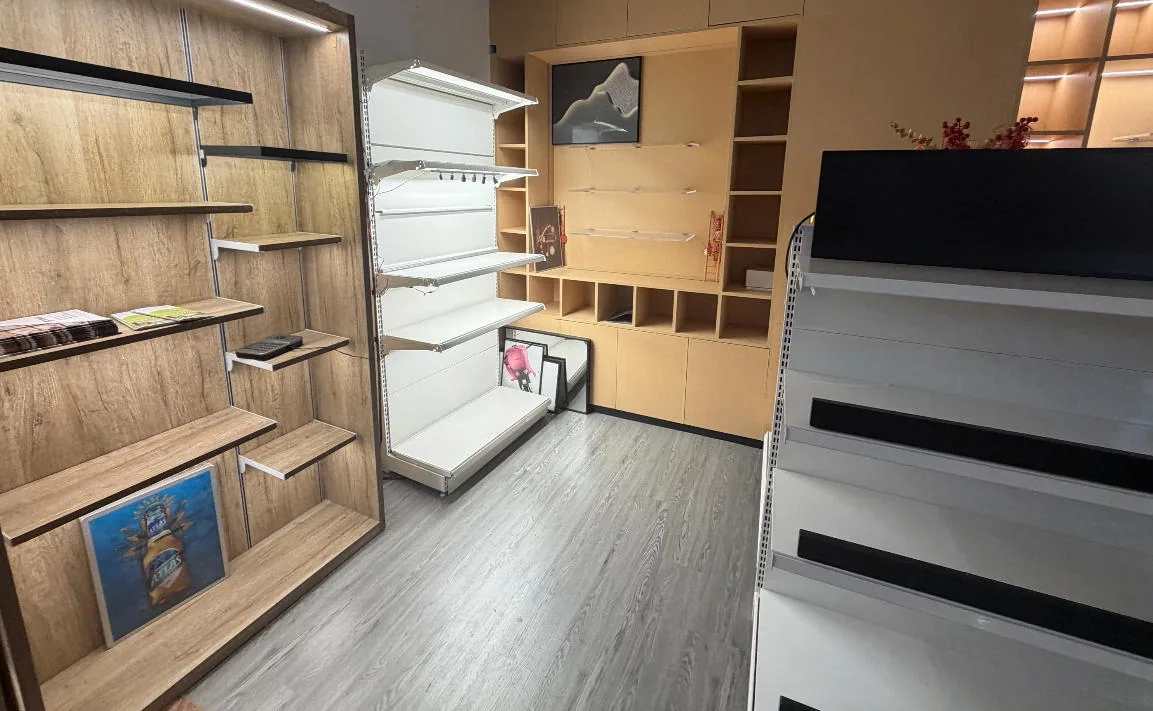
Modular display systems are retail fixture designs built around interchangeable, freely reconfigured components — gondola shelving units, snap-fit panels, adjustable shelves, and tool-free mounting tracks — rather than permanently fixed structures. A store team can disassemble and reassemble a gondola shelving run in a single afternoon. The same job with traditional fixed fixtures typically takes a full week and requires outside contractors.
The defining characteristic is standardization: components from the same system are designed to work together across multiple configurations. A base gondola unit supports different shelf depths, back-panel inserts, and accessories — without drilling, cutting, or custom fabrication. This is what makes modular display systems fundamentally different from custom fixture builds, where every adjustment means a new project.
Common formats include:
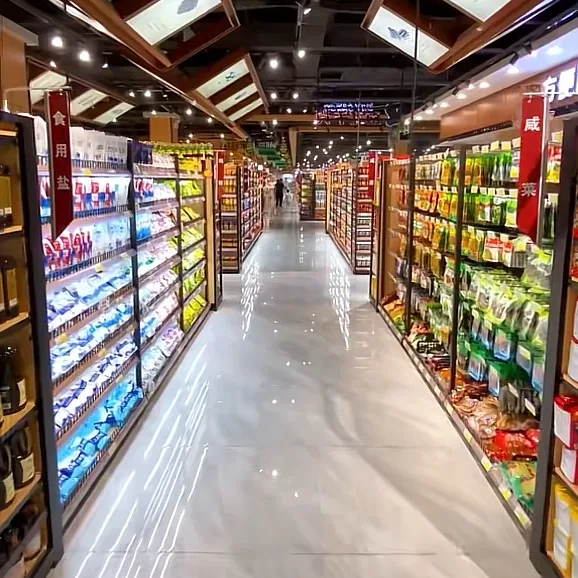
- Gondola shelving: freestanding, double-sided units with adjustable shelf heights and interchangeable accessories. The industry standard for supermarkets and hypermarkets globally.
- Slatwall panels: wall-mounted systems where hooks, shelves, and brackets slot into horizontal grooves. Common in specialty retail and convenience stores.
- Gridwall systems: wire-grid panels used in boutique settings for lightweight product display.
- Magnetic track systems: tracks mounted to gondola uprights where LED shelf lighting bars snap into place without wiring. Often paired with modular gondola shelving for lighting upgrades.
Most large-scale retailers use a combination of gondola shelving (for the selling floor) and wall-mounted modular panels (for perimeter displays). The key is that every component is designed for reuse and reconfiguration, not disposal and replacement.
Why 2026 Is the Year Retailers Are Switching to Modular Fixtures
Three converging forces are making 2026 a tipping point for modular display adoption in retail.
Promotion frequency has outpaced fixed fixture capability
Retail chains running weekly or bi-weekly promotions — a standard practice in grocery and discount retail — need to re-merchandise display zones constantly. Fixed gondola shelving built with permanent shelf brackets cannot accommodate fast rotation without significant labor. Modular systems with tool-free shelf adjustment and drop-in accessories let store teams respond to promotion calendars without calling in installers.
The data backs this up. The global retail fixtures market is projected to reach USD 3.8 billion by 2035, driven primarily by organized retail chains upgrading from fixed to modular formats (Global Growth Insights, 2026). Over 62% of all fixture installations in 2026 come from organized retail formats — supermarkets, hypermarkets, and pharmacy chains — precisely the segments most under pressure to rotate displays fastest.
Labor costs are forcing efficiency across the board
Retail labor costs in North America and Europe have risen 18–25% since 2022, according to industry benchmarks. Store teams are doing more with fewer people. A fixture system that requires two employees and four hours to reconfigure is a direct operating cost. A modular system that requires one employee and thirty minutes is a labor advantage.
Modular gondola shelving directly addresses this: shelves adjust by sliding on bracket clips, back panels swap by lifting off track pins, and gondola base units can be repositioned by two people with casters — no forklift required. For store operators buying fixtures for a new location or a renovation, this labor efficiency compounds across every store in the chain.
IoT and ESL integration demands fixture-level flexibility
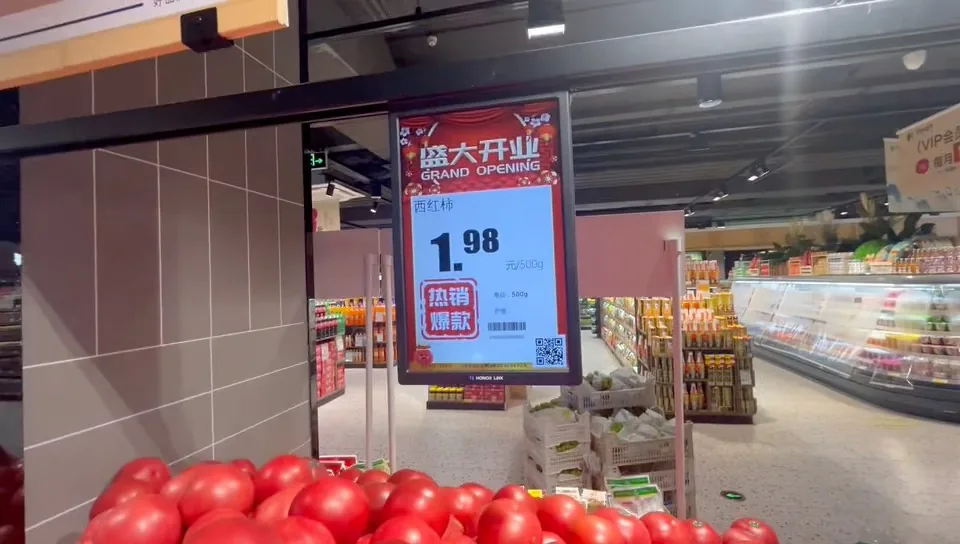
Modern retail fixtures are no longer passive. Electronic Shelf Labels (ESL) mounted at each gondola shelf position require stable, aligned mounting surfaces. Modular gondola shelving with flat back panels and standardized shelf bracket spacing makes ESL installation straightforward — labels sit flush, align cleanly, and remain readable after shelf reconfiguration.
Stores that deployed fixed shelving in 2019 or earlier are finding that ESL retrofit requires replacing the existing gondola uprights entirely, because older gondola bracket styles do not accommodate modern ESL rail mounts. 2026 is the year many retailers are finally making that upgrade — and choosing modular systems as the replacement, because ESL integration is not a one-time event. As pricing updates become more dynamic, fixture systems need to support label swaps without disrupting merchandise placement.
The Hidden Cost of Fixed Retail Display Fixtures
Fixed retail display fixtures carry three costs that buyers rarely see in the upfront price.
Reconfiguration cost. A seasonal promotion requiring a gondola run to shift 30 centimeters to accommodate a new endcap typically costs $200–$600 in contractor labor, depending on store size and fixture type. A chain running 12 promotions per year across 50 stores spends $120,000–$360,000 annually on fixture reconfiguration alone — costs that never appear on the fixture budget.
Promotional delay cost. Traditional gondola shelving reconfiguration requires scheduling contractor labor, which creates a 3–7 day lead time between promotion approval and fixture readiness. Modular systems let store staff execute same-day. For time-sensitive promotions — holiday displays, flash sales, product launches — that 3–7 day gap can mean missing the peak sales window entirely.
Opportunity cost of wrong product placement. Fixed fixtures lock in product adjacencies. When a high-margin product performs poorly in its assigned gondola position, the store cannot test an alternative placement without a contractor visit. Modular gondola shelving with adjustable shelf heights and interchangeable bracket positions lets merchandising teams run placement experiments without capital investment, directly supporting revenue optimization.
The total cost of fixed fixture inertia — labor, delays, and lost sales — often exceeds the price difference between a fixed and modular system within the first 18 months of operation.
How Modular Display Systems Work with Shelf Lighting
Shelf lighting is the most common fixture upgrade retailers add to existing gondola shelving runs. Integrating LED lighting into fixed gondola shelving typically requires:
- An electrician to run low-voltage wiring along gondola uprights
- Drilling or adhesive mounting for LED channels
- Voltage converter placement and cable management
- Testing and adjustment after installation
For a 40-bay gondola run, this translates to 2–3 days of electrician labor at typical commercial rates.
Modular display systems change this equation. Gondola shelving equipped with magnetic mounting tracks accepts magnetic LED shelf lighting bars that snap into place and receive power through conductive contact — no wiring, no drilling, no electrician.
ARMOR’s A-A Power Track System exemplifies this integration: LED bars magnetically lock into conductive tracks pre-mounted to gondola uprights. A store team installs the track once during the initial fixture setup. From then on, LED shelf lights reposition with the gondola shelves — lighting moves when the shelf moves, without any re-wiring.
This is particularly valuable in two scenarios:
Supermarket produce and fresh food sections, where modular gondola shelving gets reconfigured most frequently to accommodate seasonal produce rotations. Magnetic LED shelf lights move with the product displays, maintaining consistent color rendering (CRI 95+) and illumination quality across every new configuration.
Promotional display zones, where gondola bays are reassigned every 2–4 weeks. Magnetic shelf lighting bars can be repositioned in seconds per bay, matching the new product placement without disrupting the promotional schedule.
The result is a fixture system where lighting is not a one-time installation but a component of the modular system itself — as adjustable as the shelves.
Key Benefits for Store Operators and Buyers
For store operators and B2B buyers evaluating fixture purchases, modular display systems deliver value across four dimensions.
Speed of store setup and reconfiguration
Modular gondola shelving ships in component form and assembles with basic hand tools. A new 100-bay gondola installation that would require 5–7 days with fixed custom fixtures requires 2 days with a standardized modular gondola system. For chain operators opening multiple locations simultaneously, this time savings scales directly with store count.
Scalability across store formats
The same gondola shelving components work across different store sizes and formats. A supermarket gondola configuration scales down to convenience store dimensions using the same uprights, base plates, and shelf brackets with different shelf counts and heights. This lets fixture buyers standardize on one supplier and one component system across an entire retail portfolio, simplifying spare parts inventory and installation training.
Integration with digital shelf technology
Modular gondola shelving with flat back panels and standardized bracket spacing accommodates ESL mounting rails, IoT shelf sensors, and digital shelf displays without custom fabrication. As retailers roll out electronic shelf labels across more SKUs, fixture systems that support tool-free ESL mounting reduce the per-SKU integration cost.
Customization without custom fabrication
Modular does not mean limited. Gondola shelving systems offer hundreds of accessory options — pricing channels, divider bars, product pushers, illuminated price rails, and backlit panels — that snap or clip into standardized gondola uprights. Buyers can configure a system for a specific category (fresh food, frozen, health and beauty) without ordering custom-made fixtures. Delivery times for modular gondola accessories typically run 2–4 weeks versus 8–12 weeks for custom fabrication.
Choosing the Right Modular Fixture Supplier
Buyers evaluating modular display suppliers should assess four criteria beyond the initial quoted price.
Component standardization. A true modular system uses standardized components across its entire product line. Buyers should verify that shelves, brackets, accessories, and mounting hardware from one gondola shelving model work with components from other models in the same brand. Inconsistent component standards undermine the flexibility promise of modular systems.
Shelf lighting compatibility. If the store plan includes LED shelf lighting, verify that the gondola shelving supplier’s uprights and back panels support magnetic track mounting or standard LED channel profiles. Some gondola manufacturers design their uprights for proprietary lighting systems only, locking buyers into a single lighting supplier.
Lead time and inventory depth. Modular systems should ship from inventory, not made-to-order. Buyers should confirm that common gondola configurations (standard heights, common shelf widths, basic accessories) are stocked and available for rapid delivery. Lead times over 4 weeks for standard items indicate the supplier is running a made-to-order model — the opposite of what modular buyers need.
Scalability documentation. A professional modular fixture supplier provides layout planning tools, load capacity specifications, and installation manuals for every component. Buyers should ask for these before committing. Suppliers that cannot provide detailed component specifications are likely selling commodity gondola shelving without the engineering backbone that makes modular systems reliable at scale.
ARMOR supplies magnetic LED shelf lighting and wireless power track systems compatible with standard gondola shelving formats. If you are evaluating fixture systems for a new store or retrofit, our team can help verify lighting compatibility with your chosen gondola setup.
FAQ: Modular Display Systems for Retail Stores
What are modular display systems in retail stores?
Modular display systems are retail fixture setups built from standardized, interchangeable components — gondola shelving units, adjustable shelves, snap-fit accessories, and mounting tracks — that can be reconfigured without custom fabrication or contractor labor. The opposite of fixed custom fixtures, modular systems are designed for disassembly, repositioning, and reuse across different store layouts and product categories.
How do modular display systems reduce store setup time?
Modular gondola shelving ships as pre-engineered components that assemble with standard tools. Store teams or basic installers can set up a 100-bay gondola run in 1–2 days versus 5–7 days for custom fixtures. For reconfiguration within an existing store, modular systems with tool-free shelf adjustment and magnetic accessories let store staff execute layout changes in hours, not days.
Can modular shelving work with electronic shelf labels (ESL)?
Yes. Standard gondola shelving with flat back panels and adjustable bracket spacing accommodates ESL mounting rails from most major ESL vendors. The key is choosing gondola uprights with compatible mounting profiles. ARMOR’s magnetic LED shelf lighting systems are designed to work alongside ESL rails on gondola shelving, and our team can advise on compatibility with specific ESL brands.
What is the difference between gondola shelving and fixed fixtures?
Gondola shelving is a type of modular retail fixture — freestanding, double-sided shelving with adjustable shelves, interchangeable back panels, and accessory compatibility. Fixed retail fixtures are custom-built to a specific store layout and cannot be reconfigured without contractor labor. Gondola shelving is inherently modular; fixed fixtures are not. The choice comes down to whether the store needs flexibility for re-merchandising and promotion execution.
How do modular display systems integrate with LED shelf lighting?
Modular gondola shelving with magnetic mounting tracks accepts magnetic LED shelf lighting bars that snap into place without wiring. Power transfers through conductive contact when the LED bar locks into the track. This means LED shelf lights can be repositioned along with gondola shelves during reconfiguration — without an electrician, without drilling, and without new wiring runs. Stores using traditional wired LED installations need electrician labor every time they move or adjust shelf lighting.
What is the ROI timeline for switching to modular retail fixtures?
The ROI calculation depends on three factors: reconfiguration labor savings (contractor costs per store layout change), promotional timing gains (revenue from executing time-sensitive displays faster), and ESL integration costs (avoided full-fixture replacement when upgrading to digital shelf labels). Most chains see full ROI on modular gondola systems within 18–24 months based on reconfiguration labor savings alone — before factoring in revenue upside from faster promotional execution.
ARMOR Lighting has supplied magnetic LED shelf lighting and wireless power track systems to retail fixture distributors and store operators since 2008. Our products integrate with standard gondola shelving formats used in supermarkets, hypermarkets, and convenience stores globally. Contact us to discuss lighting compatibility with your fixture specification.
Planning a Project?
Need help applying this to your project?
If you're evaluating lighting, power distribution, or digital shelf systems for a retail fixture, tell us what you're working on.
Related to what you're reading
Modular Display Systems: The Speed-First Approach to Retail Store Fixtures in 2026
Related Articles
View All Articles »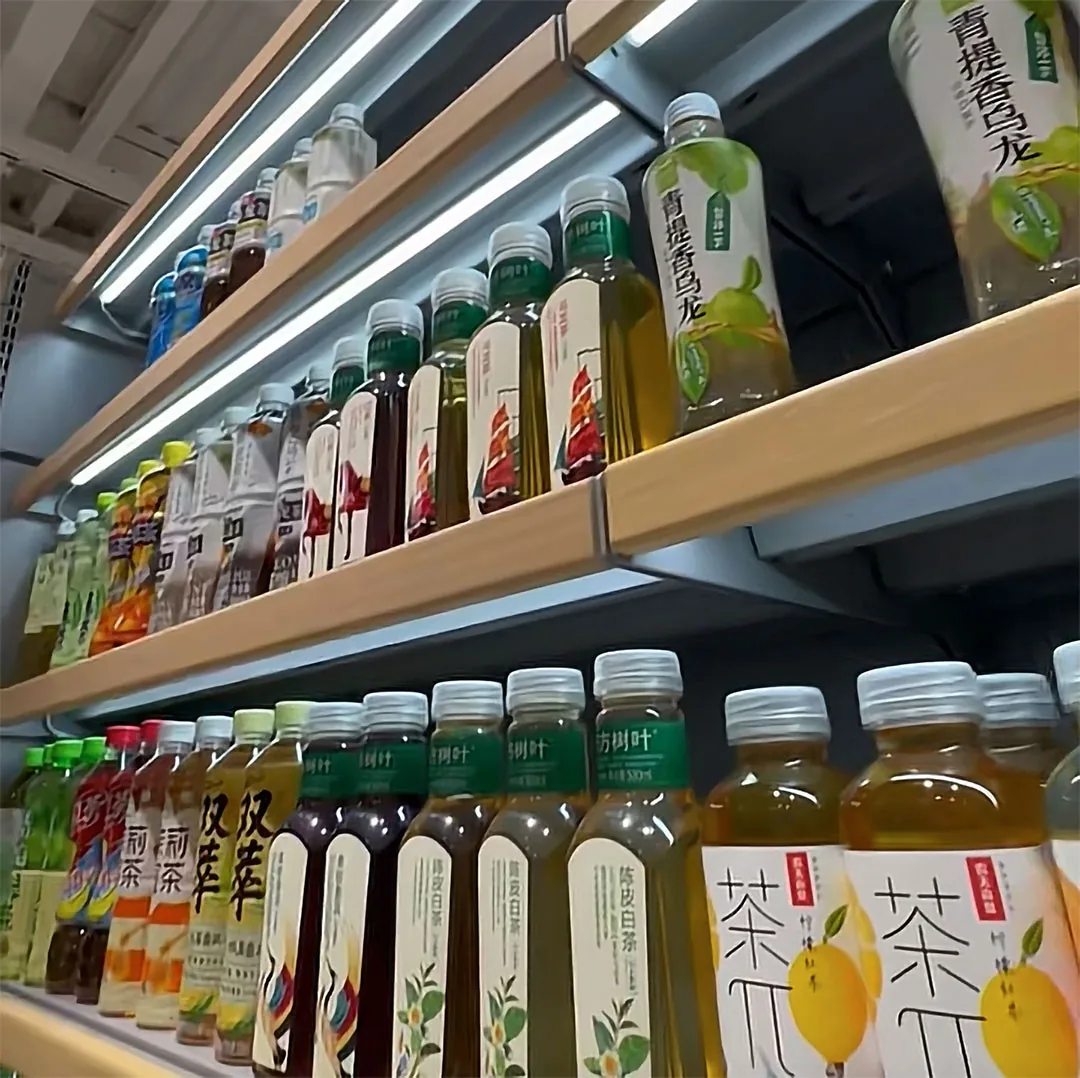
Gondola Shelving Lighting: How to Choose, Install, and Boost Product Visibility
Walk into any supermarket or convenience store and look up. The overhead fluorescent tubes do an acceptable job lighting the aisles. Now look at the shelves themselves. The products on the second, third, and fourth rows sit in their own shadow, washed out unde
Light Box or LED Neon Sign: Which Storefront Sign Is Right for Your Store?
A storefront sign is a long-term cost and a visibility decision. Compare how light box and LED neon signs illuminate differently, and how weather, local rules, and running cost should decide the choice for your store.
When Does an LCD Shelf Label Earn Its Cost in a Retail Media Program?
An LCD shelf label earns its higher cost in a retail media program only where the screen can be sold as media: a zone with a funded campaign calendar, continuous power, and proof-of-play expectations. Where the job is mainly accurate pricing across dense SKU a
Setting Shelf-Level Specs for Product-Focused Retail Lighting
Ceiling accent spots do their best work on feature walls and end caps, where a narrow beam has a clear path. On a packed gondola, that beam can be blocked before it reaches a stocked middle shelf. The aisle may look bright while the second or third shelf remai