

When Does an LCD Shelf Label Earn Its Cost in a Retail Media Program?
An LCD shelf label earns its higher cost in a retail media program only where the screen can be sold as media: a zone with a funded campaign calendar, continuous power, and proof-of-play expectations. Where the job is mainly accurate pricing across dense SKU a
On this page
An LCD shelf label earns its higher cost in a retail media program only where the screen can be sold as media: a zone with a funded campaign calendar, continuous power, and proof-of-play expectations. Where the job is mainly accurate pricing across dense SKU areas, battery-powered e-paper remains the cheaper, simpler specification. The decision is not whether LCD replaces e-paper. It is a zone-by-zone question of whether a location’s content and media revenue cover the extra infrastructure and operating cost of a powered display.
Why the shelf-edge media launches raise a cost question
The shelf edge gained a media budget in the opening months of this year, and the launches show how selective the placement is.
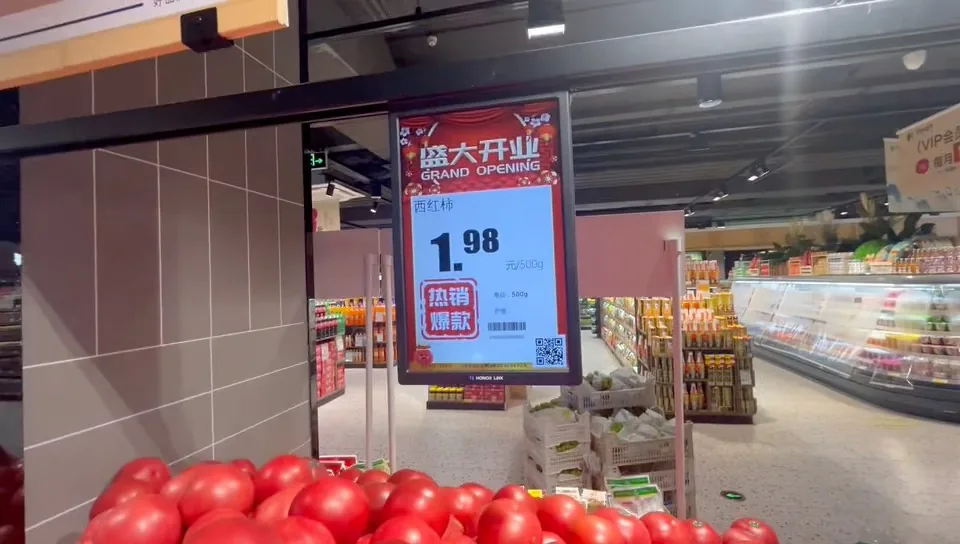
Pricer launched Pricer Avenue commercially at NRF on January 11, 2026. The platform uses a battery-free powered rail and can link multiple labels into larger display areas. Pricer calls it a communications platform rather than a price tag system. The launch followed a pilot with East of England Co-op, a 120-store UK grocery group, and the pilot concentrated on high-value areas and promotional communication. That limited placement is the pattern to notice: media-capable shelf hardware is being introduced into selected zones, not across entire stores.
Ahold Delhaize USA is building the same capability through its media network. Its Edge platform, launched in January 2026, pairs sponsored-product advertising with in-store digital screens. The screen trial covers 15 stores across five banners, and DoubleVerify support and Media Rating Council accreditation are part of its measurement plan.
Larger networks already operate at a different scale. Tesco reports media screens in more than 500 stores and over 6,500 campaigns a year, and Walmart has announced third-party advertising across more than 170,000 in-aisle screens; both figures come from Retail Media Age’s coverage of ADvendio research.
These are different hardware and business models, and none of them says “install LCD shelf labels everywhere.” What they have in common is that in-store screens are being planned as ad inventory, with campaign schedules, reporting expectations, and a budget attached. For a retailer that does not yet run that kind of program, the launches raise a practical question rather than answering it: when does a powered LCD shelf label earn the extra cost compared with the e-paper labels already doing the pricing job?
What the cost comparison actually involves
The two technologies are not competing versions of the same price tag; they have different cost structures.
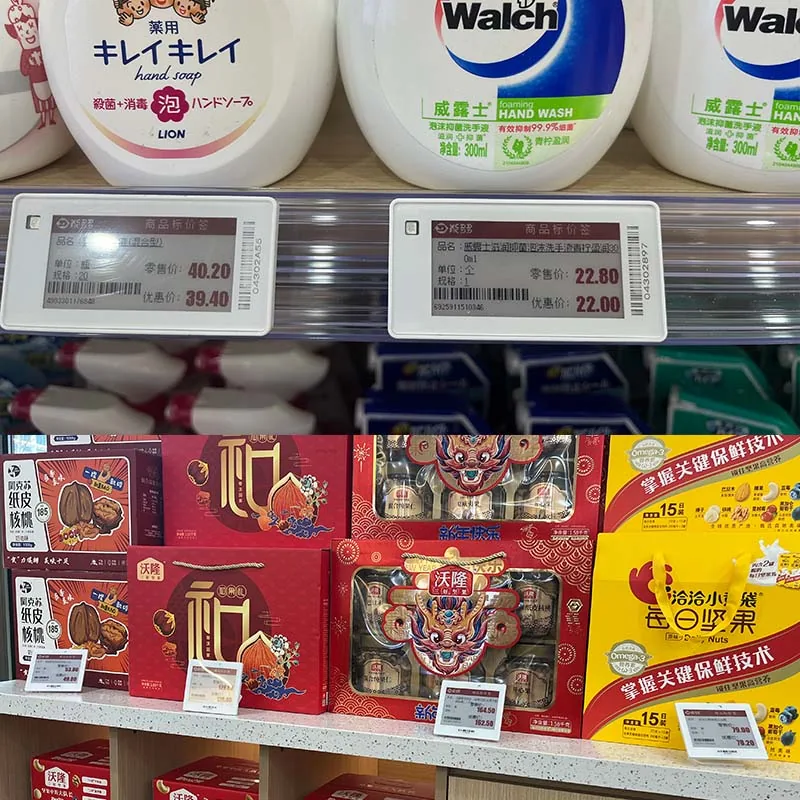
A battery-powered e-paper ESL holds static information with very little power. It is well suited to store-wide price updates: the label hardware is simple, and the battery is measured in years rather than months. Updates arrive wirelessly, so there is no power cabling on the shelf. The LCD or e-paper ESL comparison covers the basic trade-offs.
An LCD shelf label is powered continuously and can show full-color motion content, which is what makes it a media surface rather than a price tag. The higher cost is not only the screen itself. It includes the power infrastructure — rail compatibility, power distribution, cable routing, installation access — plus the operating cost of a content workflow: scheduling, creative updates, zone management, and reporting.
So the cost-earning question has three parts: does the zone have content that changes often enough to need motion; is there someone funding or measuring that media; and does the site already have, or accept, the power delivery? Where all three are true, LCD has a credible case. Where none of them is, the extra cost buys a display that mostly shows a price an e-paper label could show for a fraction of the infrastructure.
Where an LCD shelf label earns the extra cost
The strongest case for LCD is a smaller number of locations where color, motion, and frequent creative changes have a clear purpose: an endcap funded by a brand, a fresh-food promotion that changes through the day, a product launch, or a loyalty campaign near the point of decision. Those are the zones where the screen can plausibly pay for itself out of media value rather than out of the pricing budget.
The shopper evidence is real but needs careful wording. In ADvendio’s survey of more than 1,000 UK shoppers, 51% said in-store digital ads would make them more likely to buy a product, rising to 62% among Millennials, and 36% said immersive digital advertising would make them more likely to try a product they had not bought before. Those are self-reported intentions, not measured sales lift. They support piloting media zones; they do not justify a store-wide LCD rollout on their own.
Market estimates point the same way. Strategic Market Research puts LCD electronic shelf labels at about 9% of the 2025 ESL market, and multicolor and full-color ESLs — LCD and color e-paper together — at roughly 18% of revenue, about USD 441 million. IMARC estimates the US ESL market at USD 302.2 million in 2025 and projects USD 1,297.5 million by 2034 (17.05% CAGR), citing dynamic content as a factor in LCD segment growth. These are analyst estimates, not deployment plans. They describe a specialized, growing LCD role, not a market where LCD has replaced e-paper.
When e-paper remains the better specification
The flip side matters just as much. Dense SKU areas where prices change on a schedule, and where nothing is being sold as media, remain e-paper territory. A battery-powered label can be clipped onto an existing rail without power delivery or cable routing, and it keeps working for years on low power. Adding an LCD shelf label in such a zone adds infrastructure and operating cost without adding media revenue.
The practical layout is therefore a mixed shelf edge rather than a technology winner. E-paper remains the pricing layer across the store; LCD is reserved for locations with a credible media case. That allocation also keeps a pilot honest: the LCD portion has to earn its cost in the zones selected for it, and the pilot’s measurement will show whether it did.
What a pilot or RFQ must test before LCD
Once a zone qualifies as media-capable, the specification goes beyond screen size and resolution. Each requirement below is a direct test of the cost-earning question.
- Power must be designed into the shelf. LCD requires continuous power, so buyers need to confirm rail compatibility, power distribution, cable routing, and installation access before comparing screens. A retrofit into an existing aisle is a different project from clipping battery labels onto a rail.
- Brightness has to match the store. The relevant figure is readable contrast under the lighting at the intended shelf, not the brightest number in a datasheet. A washed-out screen has no value as paid inventory.
- The content workflow needs an owner. Remote updates, scheduling, zone assignment, and motion-format support should be tested with the people who will run campaigns across stores. The pilot should evaluate that operating workflow separately from basic hardware availability.
- Measurement belongs in the pilot scope. If screen time will be sold, proof-of-play and reporting requirements must be defined before installation. Without them, the display can run content without producing the evidence brand partners expect.
- Mounting and certification are model-specific. The enclosure and mounting method must match the shelf format, and the certifications required in the destination country or region must be confirmed for the exact model under review.
For form factors and sizing, the LCD shelf display retail guide goes further. The ESL market size analysis and ESL ROI review add context on adoption and payback, and the Walmart ESL rollout review shows how a large-scale pricing program is being built.
Turning the cost question into a store map
The cleanest way to run the decision is a store map, not a single preferred screen. Mark the shelves that only need accurate prices, then identify the locations intended for changing campaigns or paid media. Power, brightness, content control, reporting, mounting, and market certification can then be specified per group, and the LCD candidates are the zones that must justify their cost.
ARMOR Digital Screen is the electronic shelf label and digital display division of ARMOR (Huamang Optoelectronics), a Guangzhou-based B2B manufacturer. Its product lines include full-graphic and segmented e-paper ESL, LCD ESL, gateways, and retail digital signage. The ARMOR Product Knowledge Base also lists full-color LCD electronic shelf labels and stretched-bar LCD shelf displays from 23.1 to 47.1 inches; certification and IP ratings vary by model, with CE/ERP/UL-family certifications and IP65 protection on some listed shelf-display models. Because both technologies come from one manufacturing base, the choice can be made zone by zone rather than platform by platform.
Start with the store map, then bring the requirements to the hardware discussion. Contact ARMOR Digital Screen to discuss a pilot or RFQ for a mixed e-paper and LCD shelf-edge deployment.
Related Product Families
- Digital Displays
Browse ARMOR digital display products for retail product information and shelf communication.
Retail Digital → - Electronic Shelf Labels
Browse ARMOR electronic shelf label products for dynamic pricing and product information at retail shelves.
Retail Digital →
Planning a Retail Digital Project?
Need help applying this digital shelf approach to your project?
If you're evaluating ESL, digital shelf, or retail digital systems for a project, tell us what you're working on.
Related to what you're reading
When Does an LCD Shelf Label Earn Its Cost in a Retail Media Program?
Related Articles
View All Articles »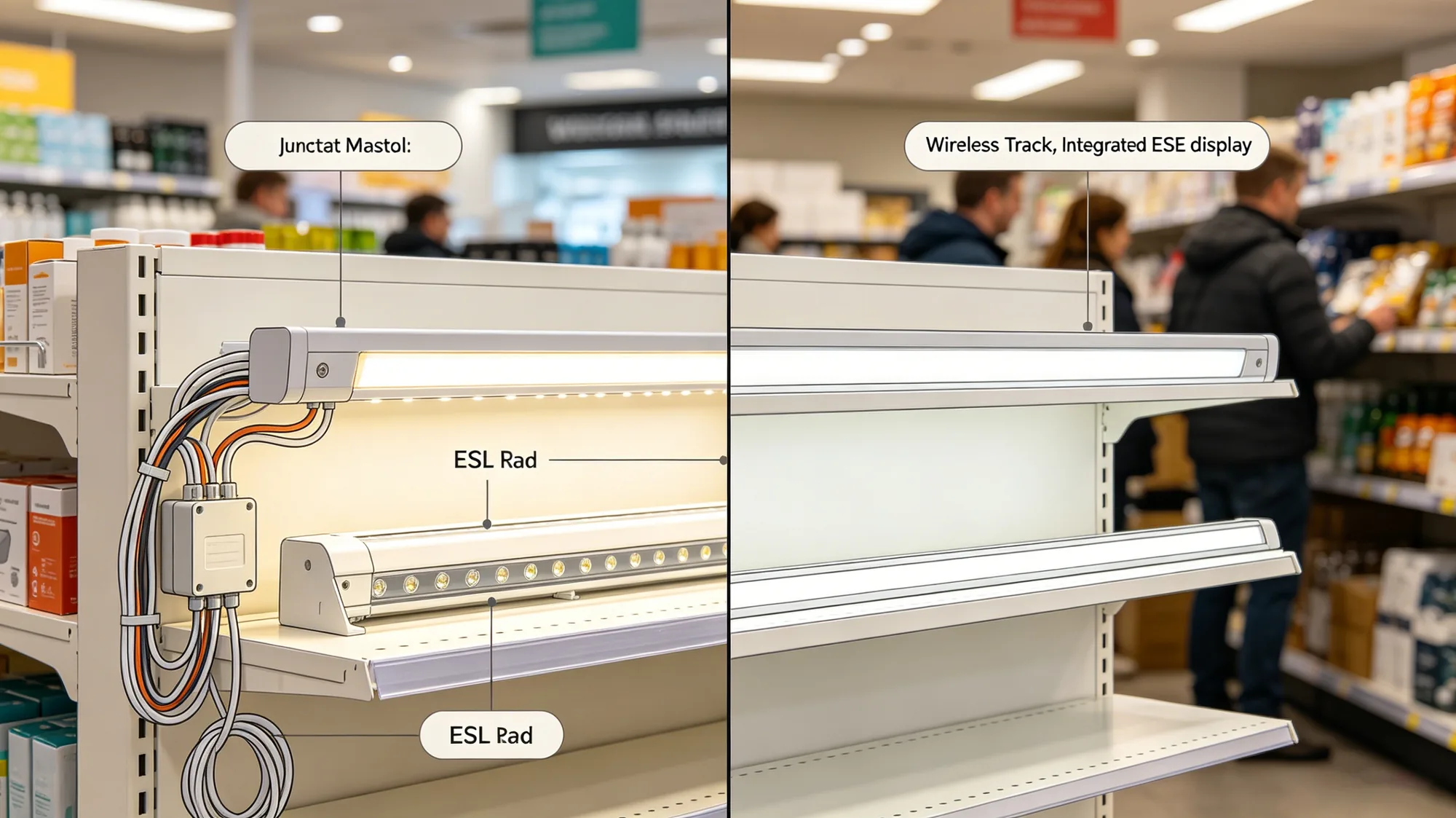
Why Integrated Lighting and ESL Deployment Cuts Store Renovation Costs by 30%
The Silo Problem in Store Infrastructure Retailers typically procure lighting and digital signage through separate channels. Lighting goes to the construction team. ESL or digital screens go to the IT or operations team. The two systems are installed in differ
Unlocking Retail Efficiency: How Electronic Shelf Labels Meet Evolving Customer Demands
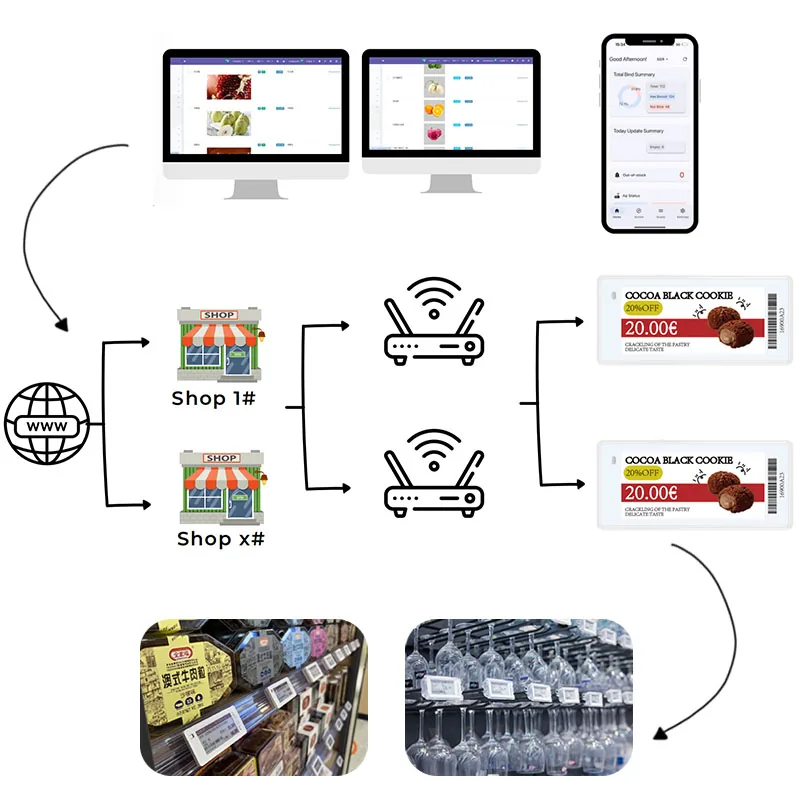
In today’s rapidly evolving retail environment, the pressure to deliver seamless, accurate, and engaging in-store experiences is higher than ever. As digital transformation accelerates, retailers are searching for innovative solutions to streamline operations,
How Electronic Shelf Labels (ESL) Enhance Store Efficiency and Customer Experience
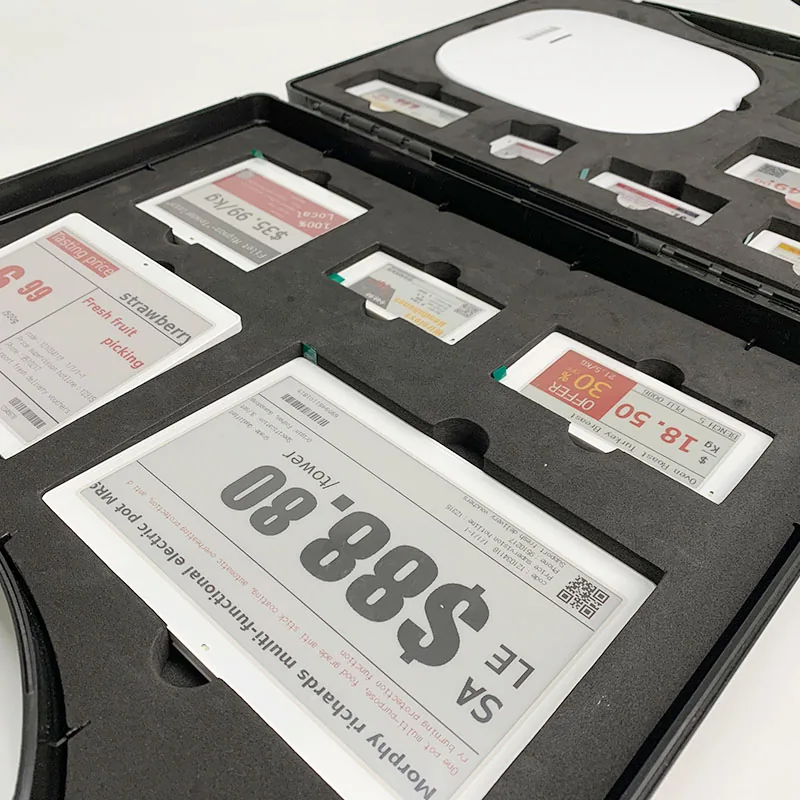
How Electronic Shelf Labels (ESL) Enhance Store Efficiency and Customer Experience Introduction In today’s fast-paced retail landscape, technology is driving transformation at every level. One of the most impactful innovations in recent years is the adoption o
Revolutionizing Retail with Smart Electronic Shelf Labels (ESLs): The Future of Pricing Automation
Introduction In an era where real-time pricing accuracy and operational efficiency make or break retail success, ARMOR introduces next-generation Electronic Shelf Labels (ESLs) . Combining IoT connectivity, energy-saving e-paper displays, and clo